The Block Archive
The Block Archive contains an extensive collection of documents, photographs and publications that represent René Block’s 60-year career as a publisher, gallerist and curator. On the occasion of the exhibition project Ich kenne kein Weekend at Neuer Berliner Kunstverein and Berlinische Galerie in 2015, art historian Dr Birgit Eusterschulte began cataloguing the archive. Since then, it has been maintained by Katrin Seemann.
The archive is partially accessible for research purposes. Selected materials such as invitation cards, posters, and catalogues are available for purchase.

As an important protagonist and attentive observer of the international art world since the 1960s, René Block has focused his work on topics such as Capitalist Realism, Fluxus, New Music, and the significance of prints and multiples. The archive contains René Block’s extensive correspondence with artists, institutions, and other cultural figures. Additional materials include a photo archive documenting exhibitions, artworks, and their creators, as well as printed materials and press articles tracing the reception of his work.
For inquiries, please contact: info@editionblock.de
Contact: Katrin Seemann
René Block and the internationally underrated
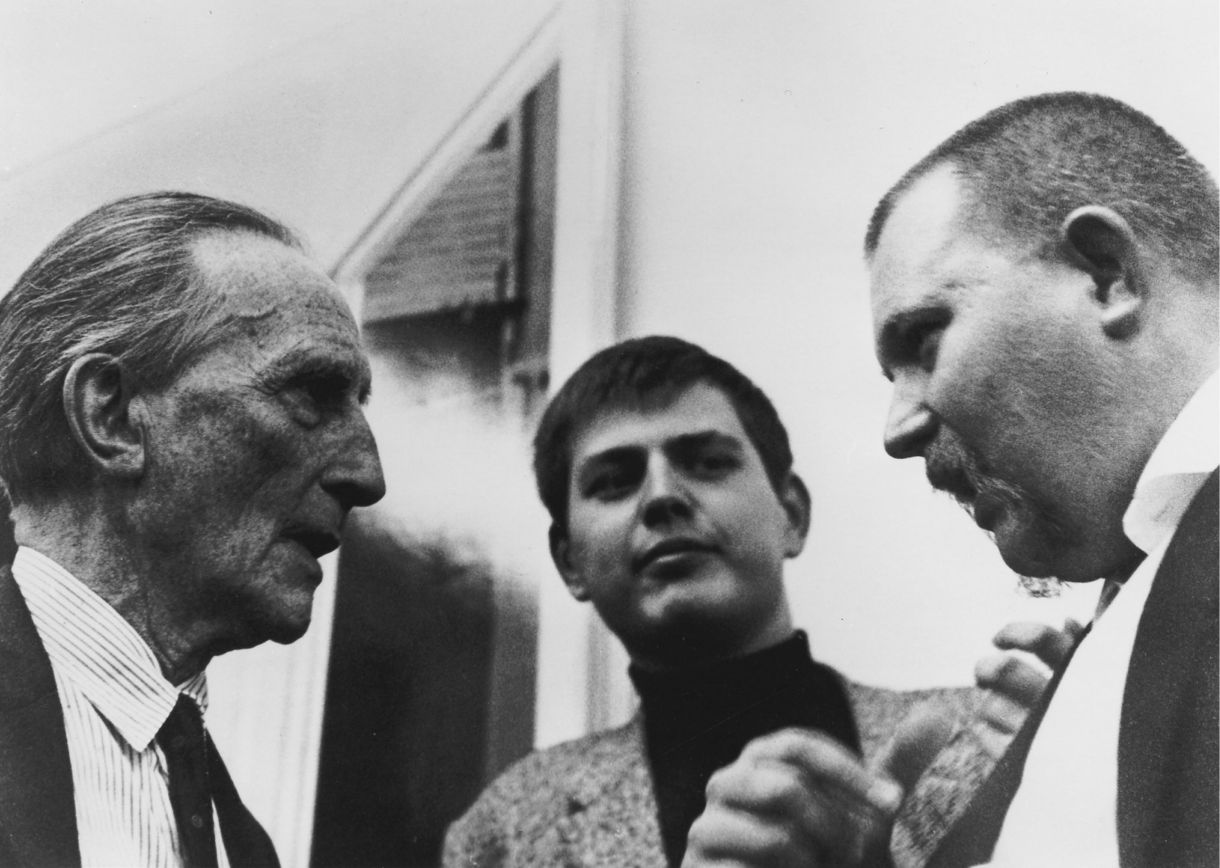
Over 60 years ago, in 1964, René Block founded his Galerie René Block in West Berlin at a time when the Cold War was raging between East and West and the division of Germany and Berlin seemed permanent. Right with its first exhibition, Neodada, Pop, Dècollage, Capitalist Realism, featuring KP Brehmer, KH Hödicke, Sigmar Polke, Gerhard Richter and Wolf Vostell, among others, the gallery became a central hub for a new generation.
Committed to the democratisation of art from the very beginning, Block organised legendary performance-/happening-soirées and exhibited the avant-garde artists of the time: first and foremost, Joseph Beuys, then Gerhard Richter and Sigmar Polke, Nam June Paik and John Cage, Allan Kaprow and Robert Filliou, Marcel Broodthaers, Richard Hamilton and On Kawara. He became one of the most important promoters and collectors of Fluxus and has remained loyal to the ’internationally underrated’ to this day.
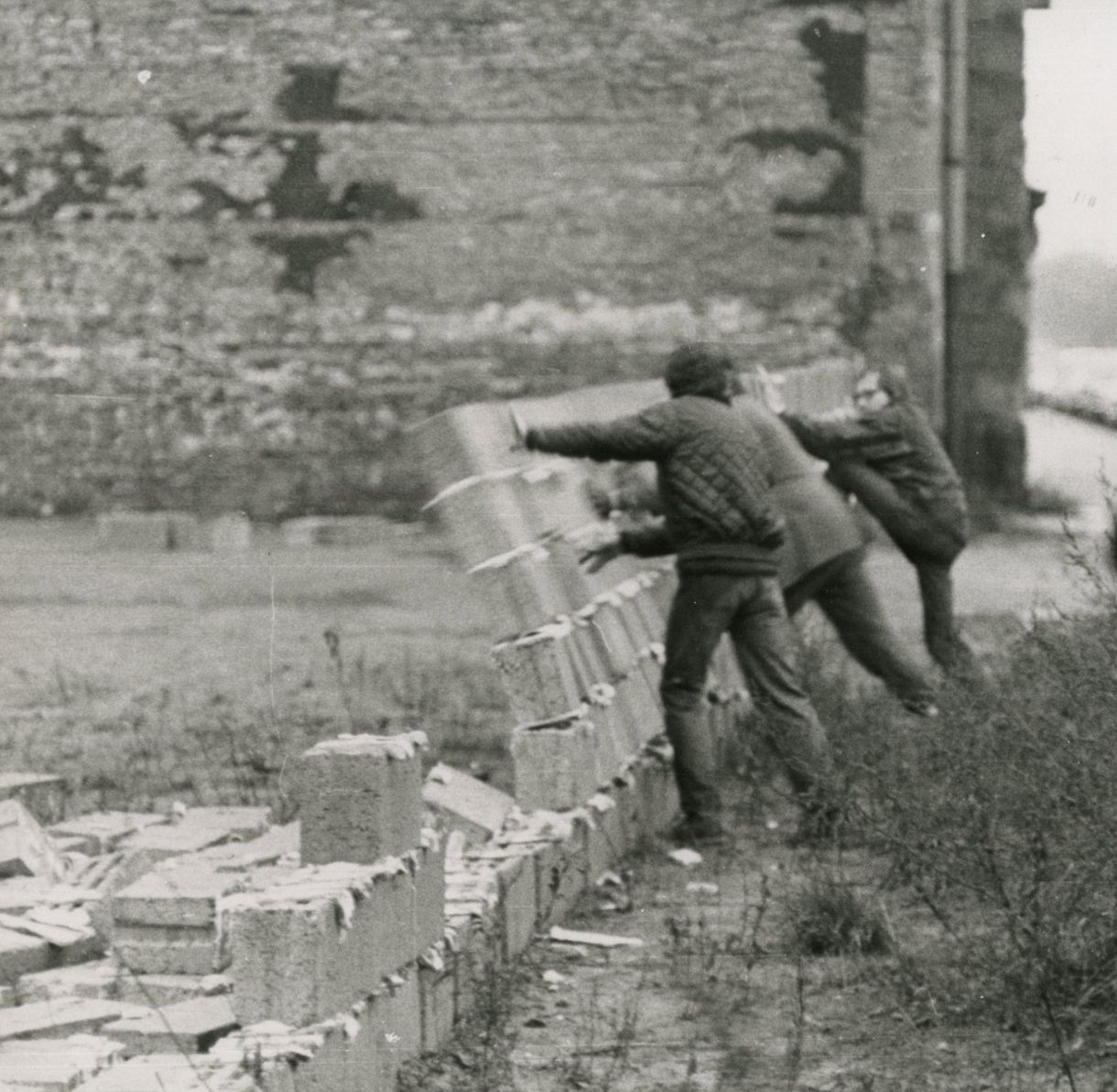
The opening of his New York René Block Gallery in 1974 marked his probably most important appearance as a gallerist. Joseph Beuys’ myth-shrouded coyote action I like America and America likes Me made the German gallerist internationally famous. The New York adventure lasted three years and was characterised by bringing a touch of Europe to the New York scene.

Block’s work into the 1970s was diverse. He was the youngest gallerist involved in founding the Cologne Art Market in 1967 and organised the first trade fair for multiple art in Berlin in 1972. In 1972, he also curated the exhibition Szene Berlin Mai ’72 (Berlin, Stuttgart, London and Hamburg) and the exhibition Grafische Techniken for the Neuer Berliner Kunstverein. For the Akademie der Künste and the Berliner Festspiele, he conceptualised exhibitions such as New York – Downtown Manhattan: SoHo (1976), taken over by the Louisiana Museum, Denmark, and Für Augen und Ohren (1980), taken over by the Museum ARC, Paris. One year later, this led to the exhibition Art, Allemagne, Aujourd’hui, the first exhibition of German post-war art in France. Eventually, from 1982 to 1992, he worked as director of the visual arts and music programme areas of the DAAD’s Berlin Artists-in-Residence Programme, playing a decisive role in the international network of visual artists and musicians in Berlin.
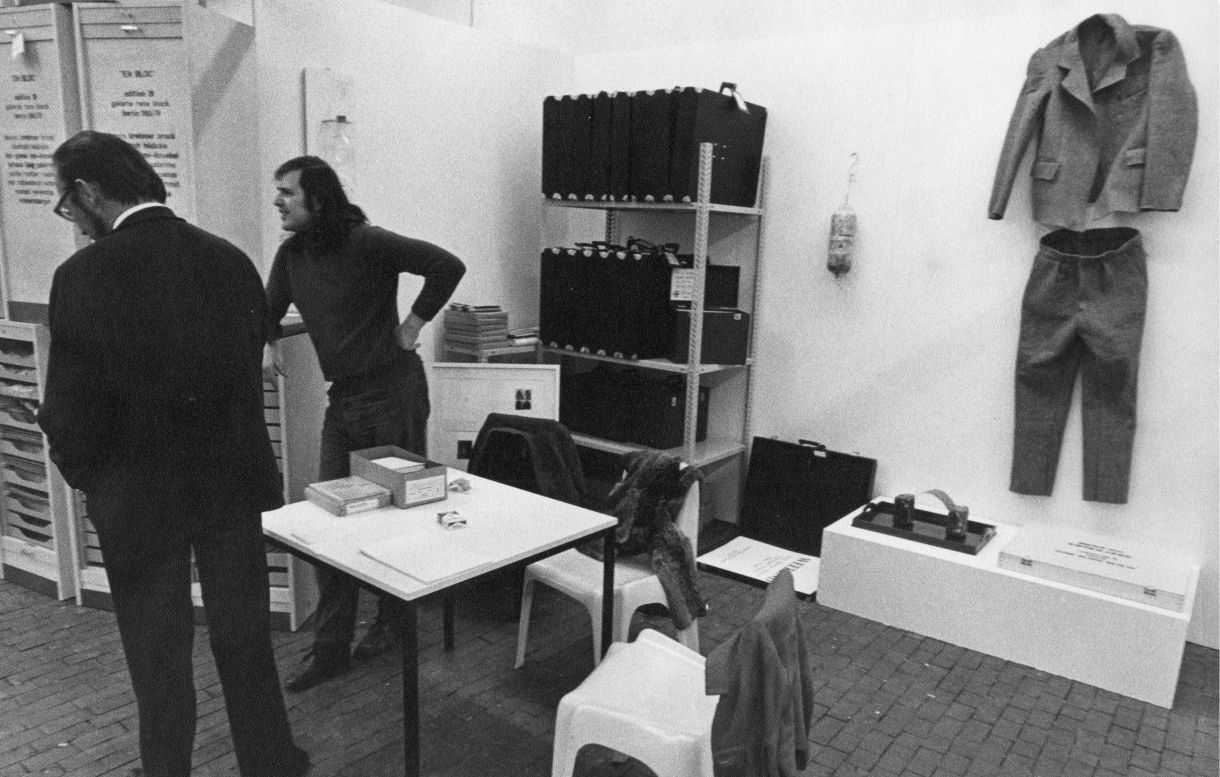
René Block published pioneering publications and editions, was involved in many independent projects alongside his gallery work and became an internationally successful curator after closing his gallery. Following his work with the DAAD Artists-in-Residence Programme, he was director of exhibitions at the Institute for Foreign Cultural Relations (IFA) in Stuttgart from 1993 to 1995. The core element of his work as a gallery owner and curator was and is lived internationalism. In pursuit of this mission, he curated a series of biennales – including the Art-of-Peace-Biennale in Hamburg (1985), the Gwangju Biennale (2000), the Biennale Love It or Leave It in Cetinje (2004), the October Salon in Belgrade (2006) and the Nordic Pavilion at the Venice Biennale (2007) – and published extensive print portfolios for each of them. His biennales in Sydney, The Readymade Boomerang (1990), and Istanbul, Orient/ation (1995), set new standards. Between 1997 and 2007, he directed the Fridericianum in Kassel, the exhibition venue for Documenta. Outstanding projects from this period include the exhibitions Echolot oder 9 Fragen an die Peripherie (1998) and the Balkan Trilogy (2003-2005), an innovative major project realised over two years, which took place in various formats, from exhibitions to symposia and workshops, both in Kassel and in the Balkan regions themselves. The focus on the Balkans led to an ongoing commitment to Turkey, which culminated in the founding of the Tanas exhibition space for Turkish art in Berlin in 2008.
In 2008, René Block initiated Kunsthal 44Møen in Denmark, where he served as artistic director until 2024. In 2015, the Neue Berliner Kunstverein, in collaboration with the Berlinische Galerie and the Lentos Kunstmuseum Linz, dedicated an extensive exhibition to René Block entitled Ich kenne kein Weekend. In 2022, René Block curated the third Riga Biennial under the title Exercises in Respect, which had to be cancelled shortly before its opening due to Russia’s war of aggression against Ukraine. On the occasion of René Block’s 80th birthday, the Neues Museum Nürnberg organised a retrospective of his multiple editions entitled Drei Hubwagen und ein Blatt Papier, which was shown simultaneously in the three Lower Rhine museums in Goch, Kleve and Moyland in 2024. The accompanying catalogue, which is designed as a complete catalogue of Edition Block, lists and comments on all of the limited-edition objects published by Edition Block for the first time.

René Block was awarded the German Critics’ Prize in 1973, the Danish Arthur Køpckes Mindefond in 1994, the Art Cologne Prize in 2005 and the Hessian Culture Prize in 2007. In 2002, René Block received the Order of Australia (AM), and since 2008 holds an honorary professorship at the University of the Arts Bremen.
This text is based on the foreword by Marius Babias and Stella Rollig to the publication ‘René Block. Ich kenne kein Weekend’, published by the Neuer Berliner Kunstverein, the Berlinische Galerie and the Lentos Kunstmuseum Linz, Verlag der Buchhandlung Walter König, Cologne 2015.