Olaf Metzel
Bond Store Lockers

1990

EB61

Metal lockers
183 x 30,1 x 69 cm - 218 x 127 x 46,5 cm

Edition of 8, signed and numbered certificate

price on demand
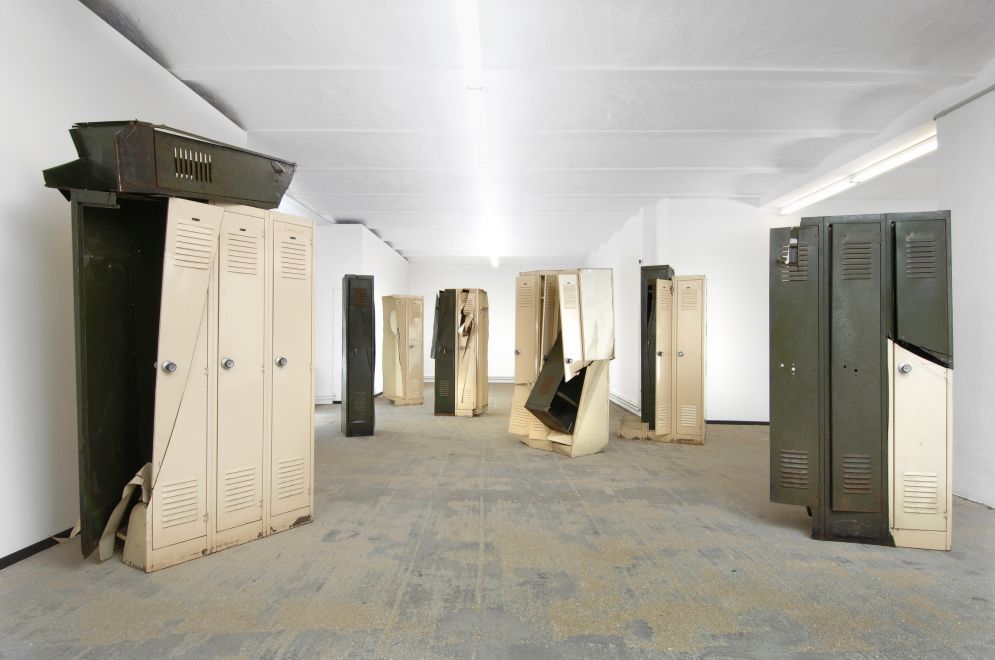
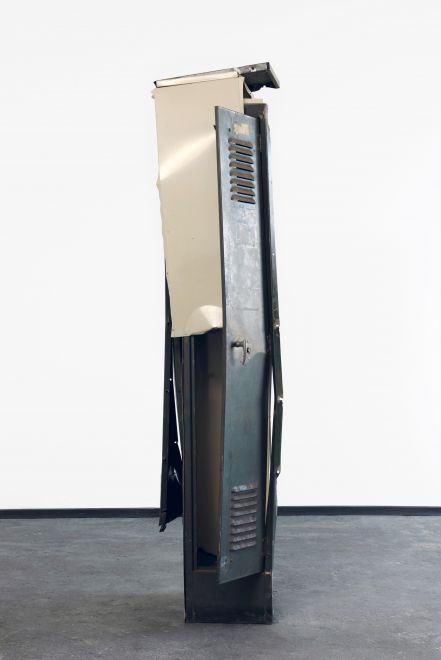
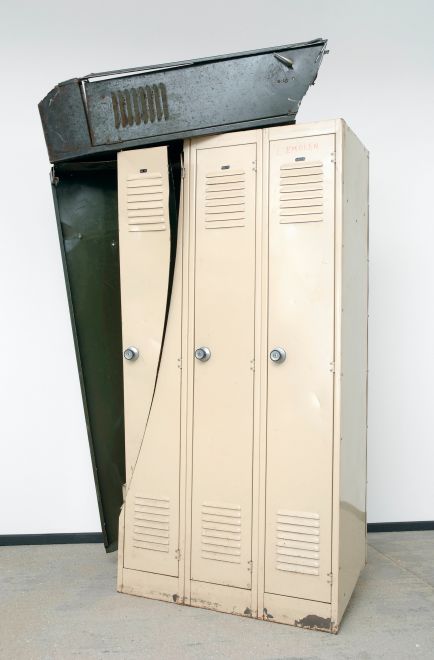
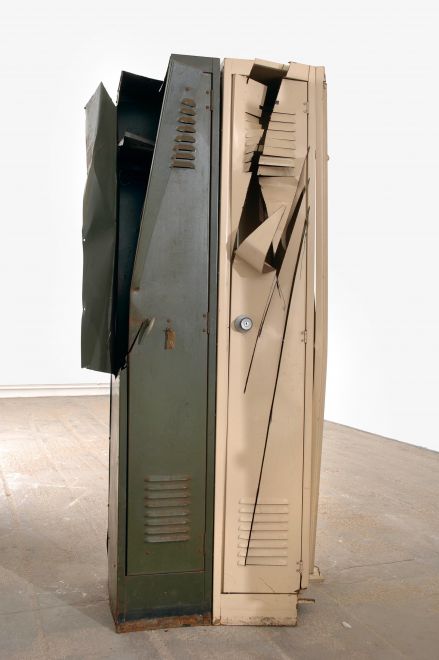
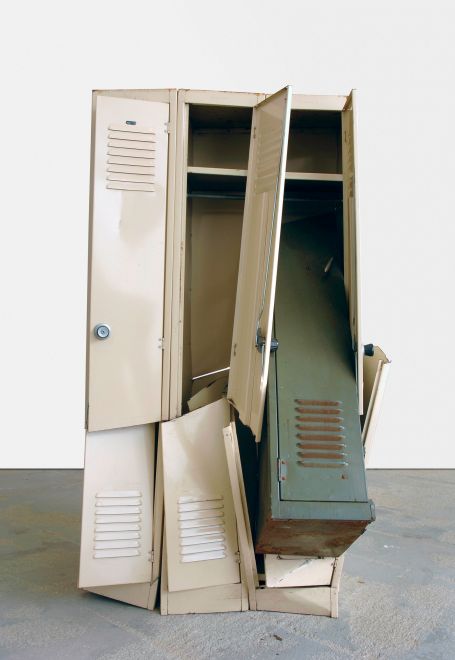
Edition by Olaf Metzel. A group of beige and olive-green metal lockers that have been destroyed with an angle grinder and reassembled. They are reminiscent of cubist compositions
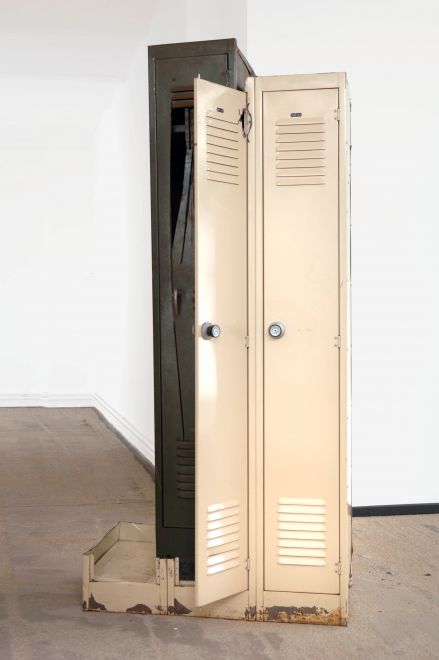
Edition by Olaf Metzel. Beige and olive green metal locker, destroyed and reassembled with an angle grinder. The object is reminiscent of cubist compositions
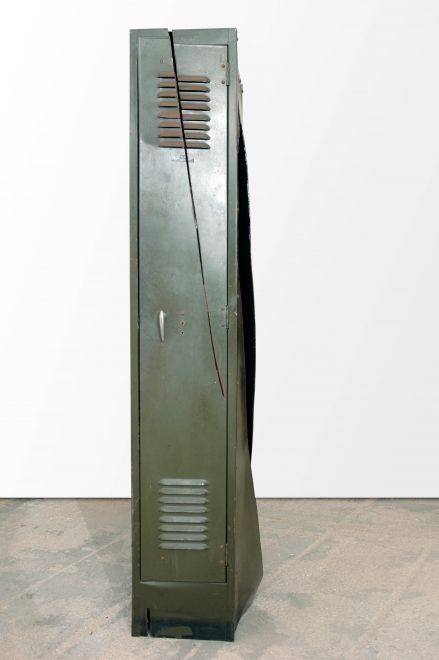
Edition by Olaf Metzel. Olive green metal locker, destroyed with an angle grinder. The object is reminiscent of cubist compositions
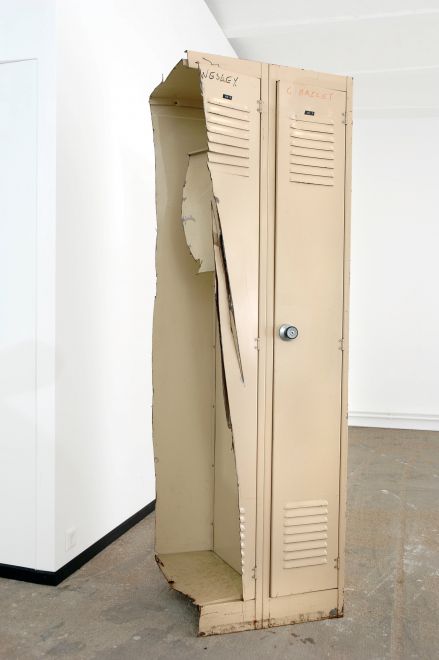
Edition by Olaf Metzel. Beige metal locker, destroyed with an angle grinder. The object is reminiscent of cubist compositions
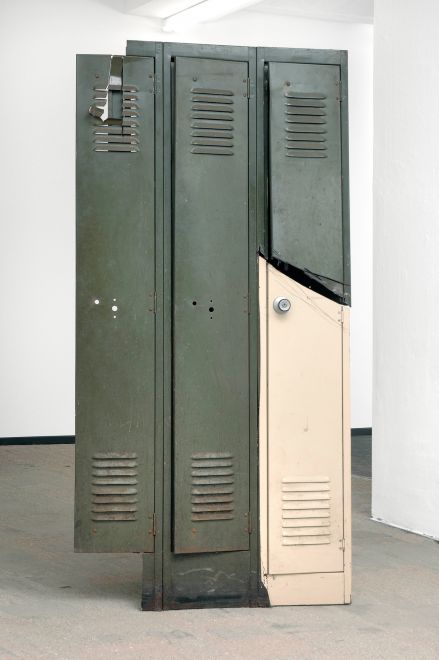
Edition by Olaf Metzel. Beige and olive green metal locker, destroyed and reassembled with an angle grinder. The object is reminiscent of cubist compositions

    The edition Bond Store Lockers originated from an installation by Olaf Metzel for the 8th Sydney Biennale, The Readymade Boomerang – Certain Relationships in 20th Century Art, in 1990. Metzel found the metal lockers in the abandoned historic Bond Store warehouses, one of the main venues of the Biennale. He worked on them performatively and visibly brutally with an angle grinder. The partially destroyed lockers were later reassembled and combined in groups, creating exciting contrasts in form and color reminiscent of cubist compositions. The edition consists of eight different groupings of one to four of these lockers. The gestural vandalism in Metzel’s works dates back to the 1970s, when the police violently broke into several artists’ studios at the Berlin University of the Arts during the “German Autumn” and deliberately destroyed the works inside. Metzel’s studio was also affected. After this event, his aesthetic language changed drastically as he incorporated the aggression and frustration he had experienced into his works. The demonstrative gesture of protest conceals a precise (de)constructive-aesthetic act and a pointed social critique.
    Text: Eva Scharrer