Alicja Kwade
Nachts
2020
EB104
Candlewick, framed in passepartout, text in canvas box
31 x 23 x 2.5 cm
Edition of 24 + 5 AP, signed and numbered
3.600 Euro
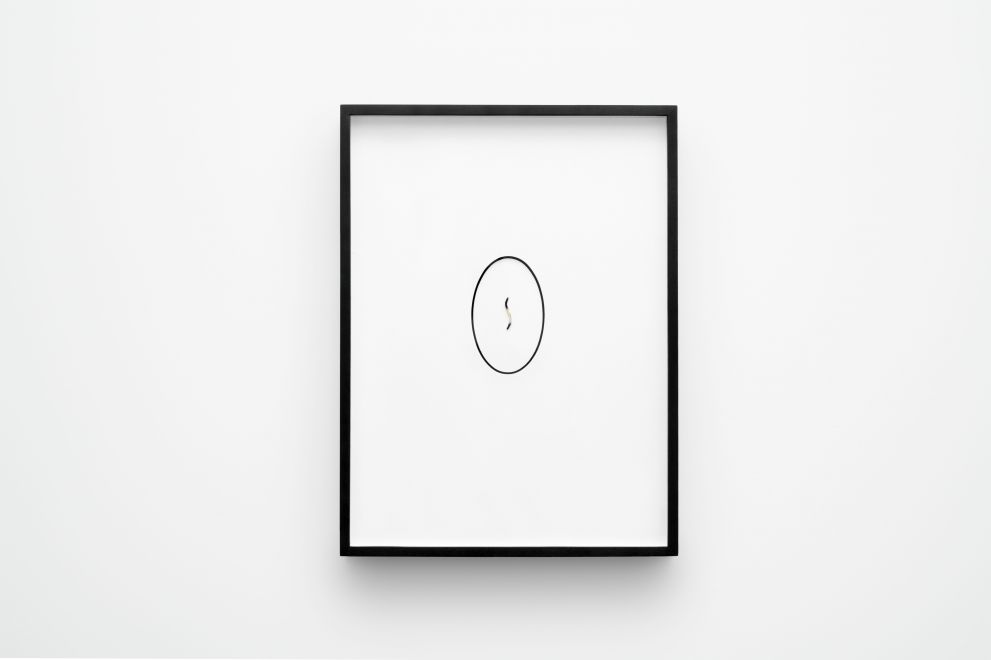
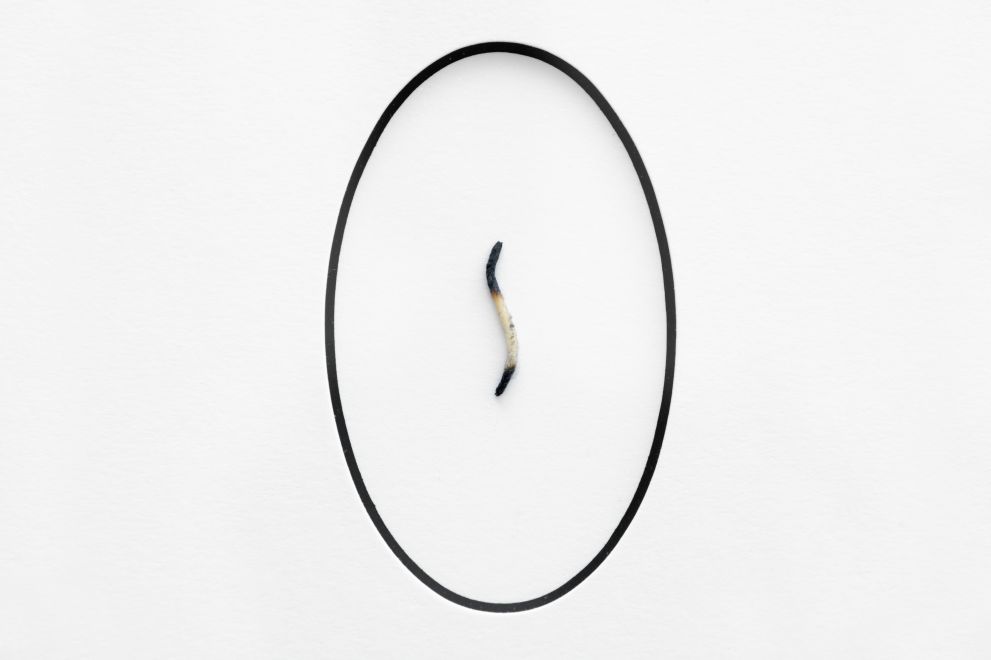
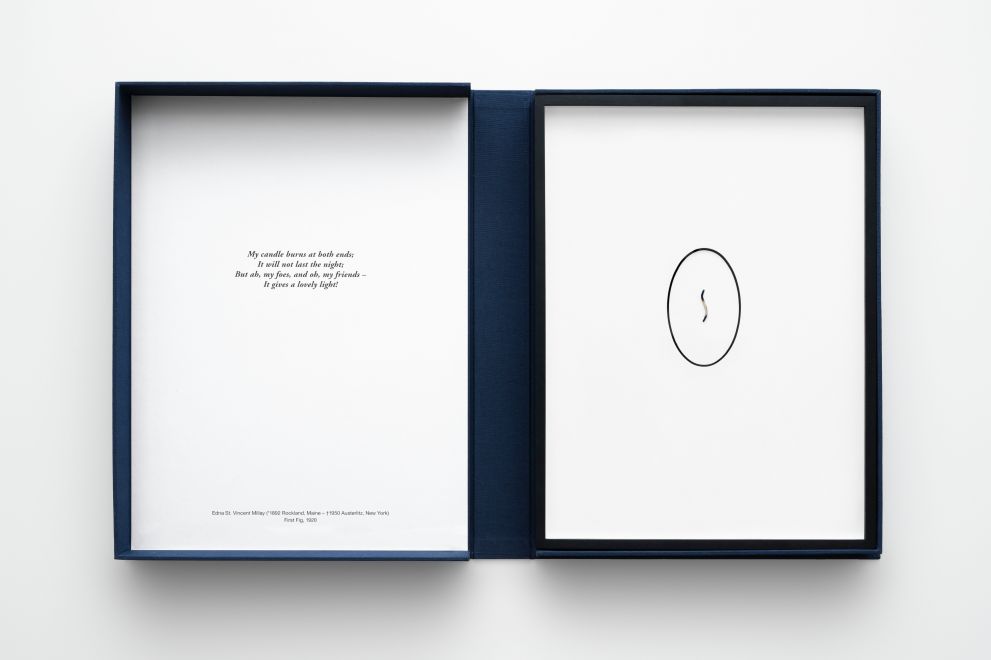
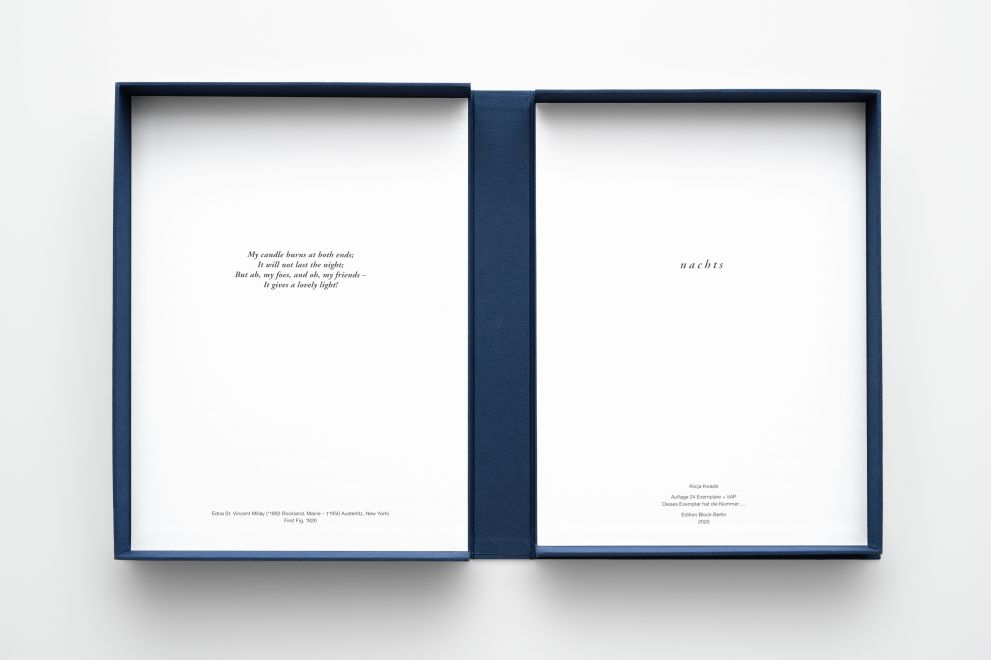
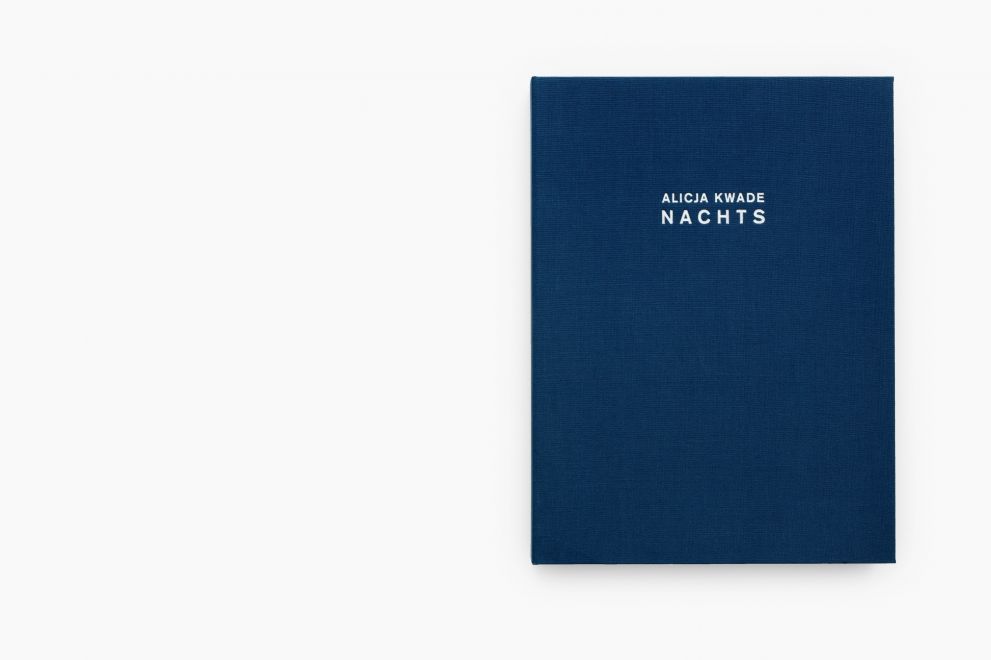
The starting point for Alicja Kwade’s edition Nachts (At Night) is the famous poem First Fig, written by Edna St. Vincent Millay in 1920. It describes the poet’s life as a candle burning at both ends – short, but all the brighter for it. It is unclear whether Millay invented this image or borrowed it, but the metaphor is clear: it describes a life lived to the fullest, which, in its passion – for (artistic) work, love, alcohol, and drugs – consumes itself faster than a “normal” life. Millay herself lived it to the point of self-destruction and, with her quatrain, describes the feeling of a generation in a time of upheaval at the beginning of the 1920s. Alicja Kwade, who has repeatedly dealt with the visualization, measurement, and paradox of time in her work, revisits this image and the attitude toward life it describes a hundred years later. To visualize the metaphor, she had candles burn from both sides without the flames meeting in the middle and becoming one – that is, exactly to the point before they could consume themselves. The self-destructive exuberance is halted by precise artistic calculation. The same idea, materialized differently, also underlies the edition My candle burns at both ends from the same year, whose title quotes the first line of Millay’s poem verbatim: the candle stubs burned down on both sides were cast in bronze, painted naturalistically, and presented on a marble pedestal – as if the remnants of the self-consuming element had been preserved for eternity. For the edition Nachts, 24 wick stubs were freed from the remaining candle wax and framed in round or oval passe-partouts. The framed picture lies in a canvas box, with the poem reproduced on the left-hand side inside.
Text: Eva Scharrer