KP Brehmer / Philip Corner
Bilder einer Ausstellung
1975/1988/1998
EB49
EB49a: Portfolio with 10 etchings by KP Brehmer (each 53 x 67 cm) and 11 hand-colored photocopies by Philip Corner (each 21,5 x 35,5 cm, signed and numbered), LP
Of the originally planned edition of 30 etchings, around 15 were printed. Of the 15 planned portfolios, 10 were produced.
7.500 Euro
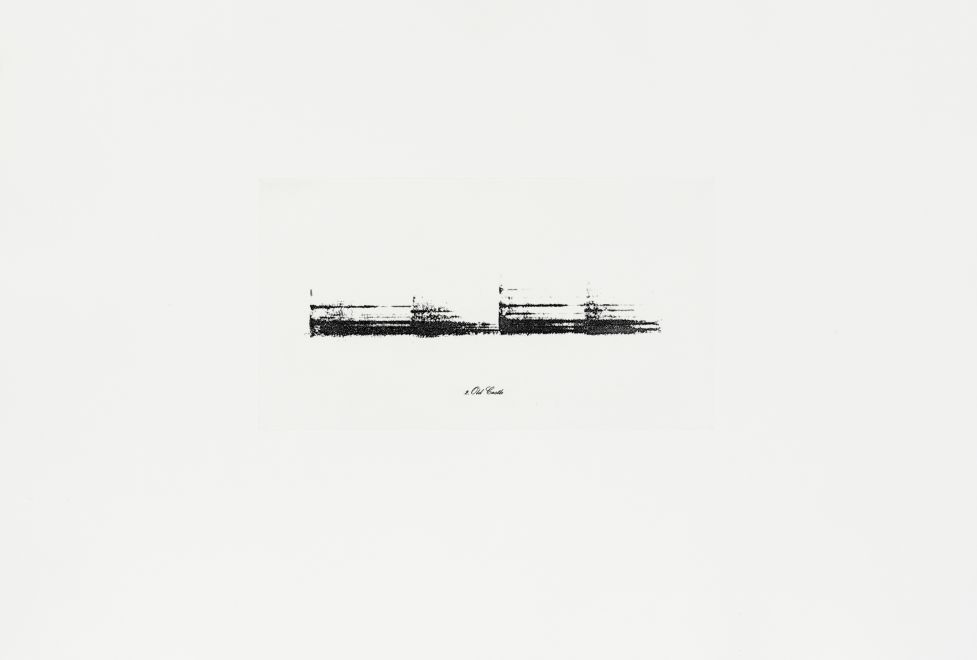
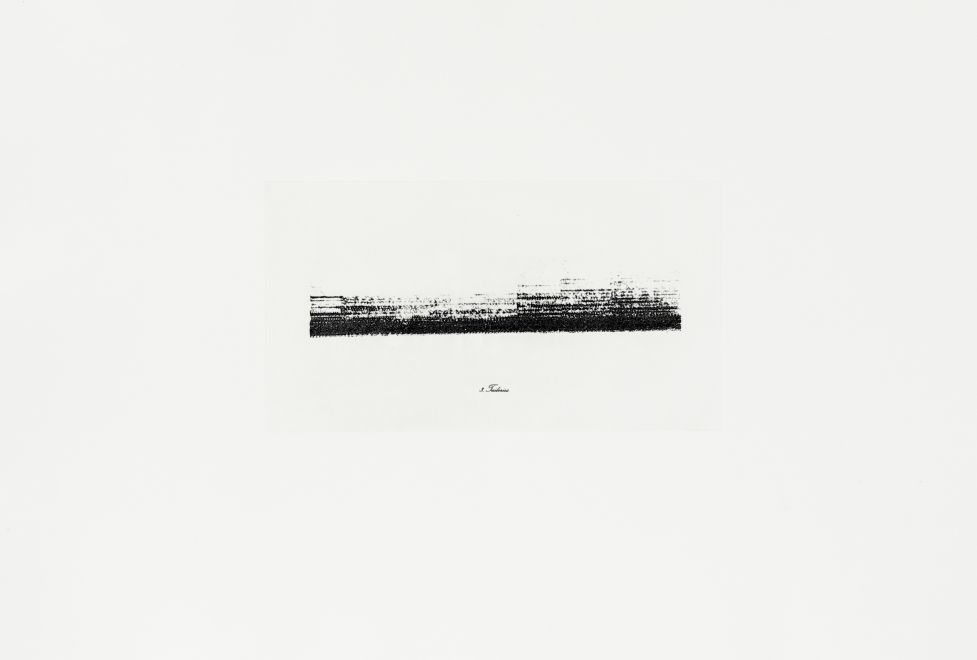
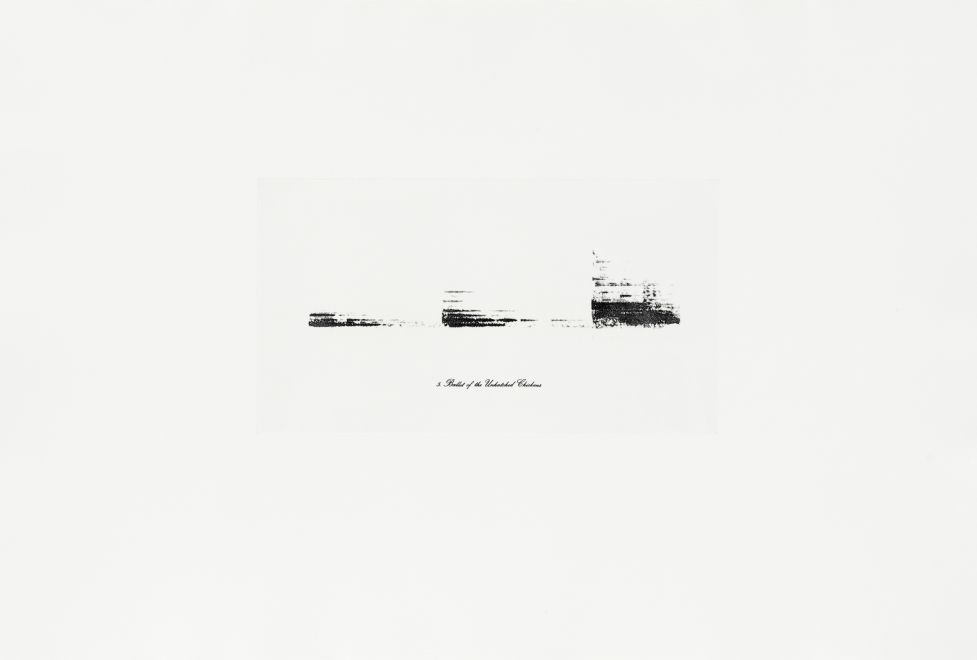
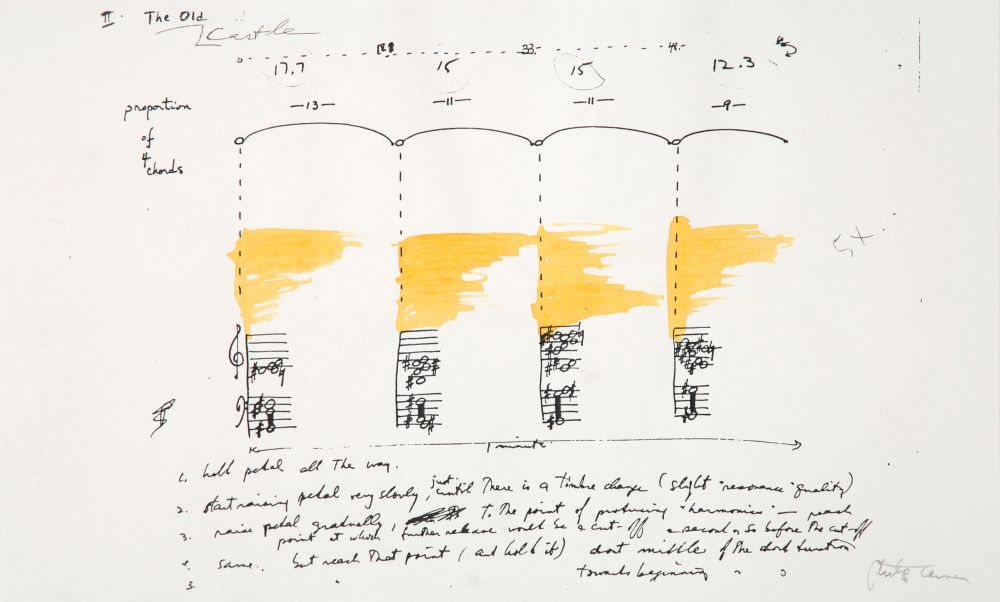
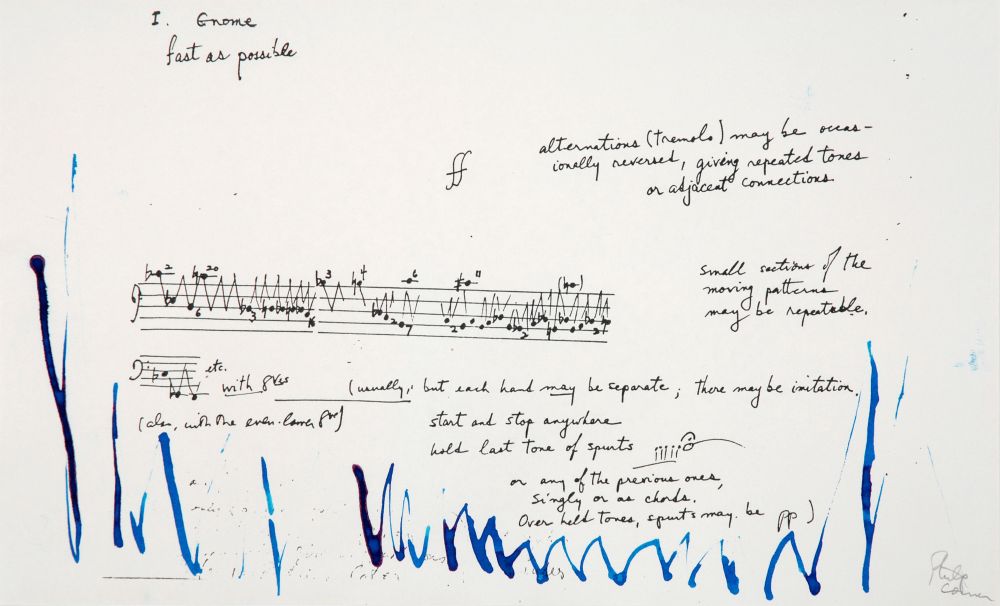
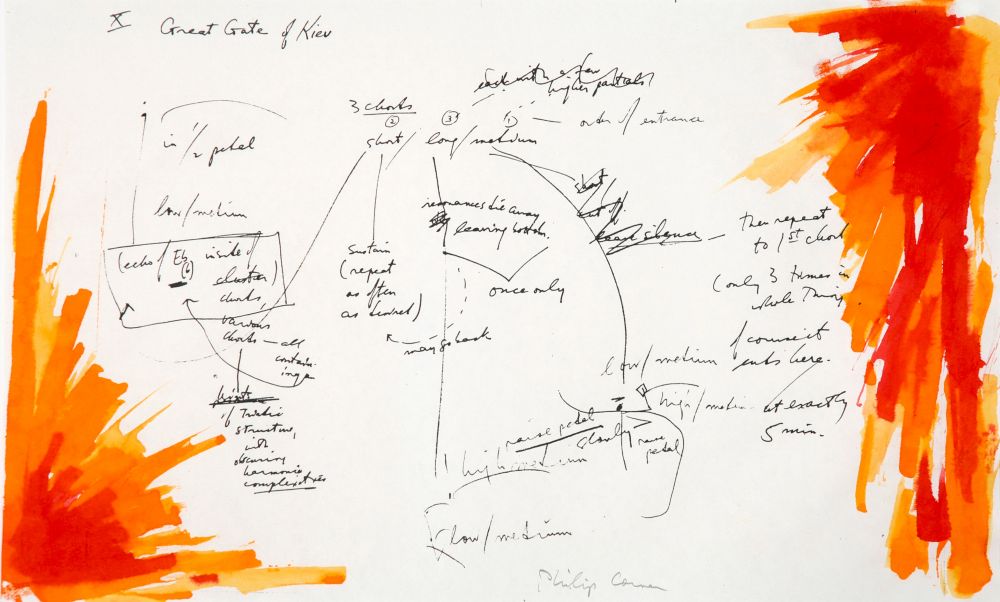
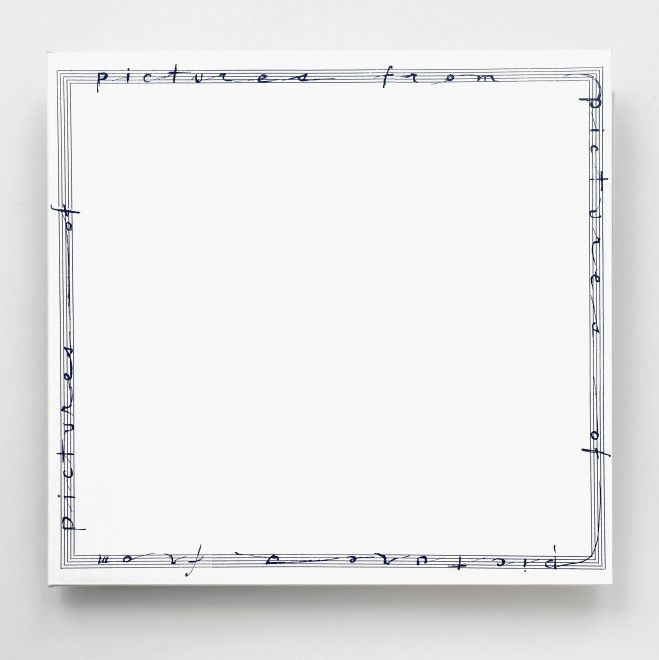
In March 1975, KP Brehmer’s exhibition Pictures at an Exhibition opened at the Block Gallery in New York. The ten works on display by KP Brehmer are visualizations of the ten movements of Modest Mussorgsky’s eponymous piano cycle Bilder einer Ausstellung (Pictures at an Exhibition), which he had composed in 1874 after seeing an exhibition in memory of his friend and architect Viktor Hartmann, who had died a year earlier. The ten movements of the cycle, in which Mussorgsky set mostly lost drawings and watercolors by his friend to music and named them after him, are linked by musical promenades that evoke walking around the exhibition. Brehmer’s retranslations into visuals also follow the titles of Hartmann’s paintings and Mussorgsky’s motifs. “The scientifically ascertaining recording of the Berlin painter K.P. Brehmer through a sonagraph from 1975”, explains the musicologist Helga de la Motte-Haber Brehmer’s approach, ”gains a fundamentally different meaning from the pictures of an exhibition than that which emerged from Mussorgsky’s musical realism or Kandinsky’s idea of synthetic art. The visualization of sound waves, for which excerpts lasting 4 to 5 seconds each were selected from the movements of Mussorgsky’s piano suite, according to characteristically perceived qualities, can be understood as an experimental search for a way to intervene in the world determined by technical apparatuses.”1 The installation-based first presentation of Brehmer’s cycle in the New York exhibition also takes up Mussorgsky’s Promenades again. Via five cassette recorders with endless loops, which stood on pedestals between individual picture panels, visitors could listen to the corresponding promenades from Mussorgsky’s composition and “ideally”, according to Brehmer, “be guided through the exhibition by the promenades”.2 In New York, Brehmer also came up with the idea of reinterpreting Bilder einer Ausstellung in music, for which the composer Philip Corner was recruited at John Cage’s suggestion. In a composition process lasting several years, Corner first created the score Pictures of Pictures from Pictures of Pictures (1975-1979), based on Brehmer’s visualization and with recourse to Mussorgsky’s motifs, and recorded it in 1985 at the Electronic Studio of the Technical University of Berlin. The LP Pictures of Pictures from Pictures of Pictures is released in 1988 by Edition Block in an edition of 500.
In 1998, one year after Brehmer’s death, the joint edition Bilder einer Ausstellung was shown in its entirety for the first time as part of the retrospective KP Brehmer. Alle Künstler lügen at the Kunsthalle Fridericianum in Kassel for the first time. The portfolio contains ten large-format photo etchings on copperplate paper by KP Brehmer (B 152 a-k), which were created on the basis of sonagrams of motifs from Mussorgsky’s piano cycle and had already been printed in 1975 under the artist’s supervision but are no longer signed. In addition to the 1988 LP Pictures of Pictures from Pictures of Pictures with Corner’s recording, it contains eleven hand-colored and signed photocopies with excerpts from Corner’s score.
Text: Birgit Eusterschulte
1 Helga de la Motte-Haber, “Pictures”, text of the LP cover for Philip Corner, Pictures of Pictures from Pictures of Pictures 1975-1979, published by Edition Block, Berlin 1985.
2 KP Brehmer, »Bilder einer Ausstellung. Nach Hartmann/Mussorgski«, in: Für Augen und Ohren. Von der Spieluhr zum akustischen Environment, exhib. cat.. Akademie der Künste und Berliner Festspiele GmbH, Berlin 1980, p. 166.