Ivan Wyschnegradsky
Vierteltonmusik
1983
EB52
Double-LP
Edition of 500
30 Euro
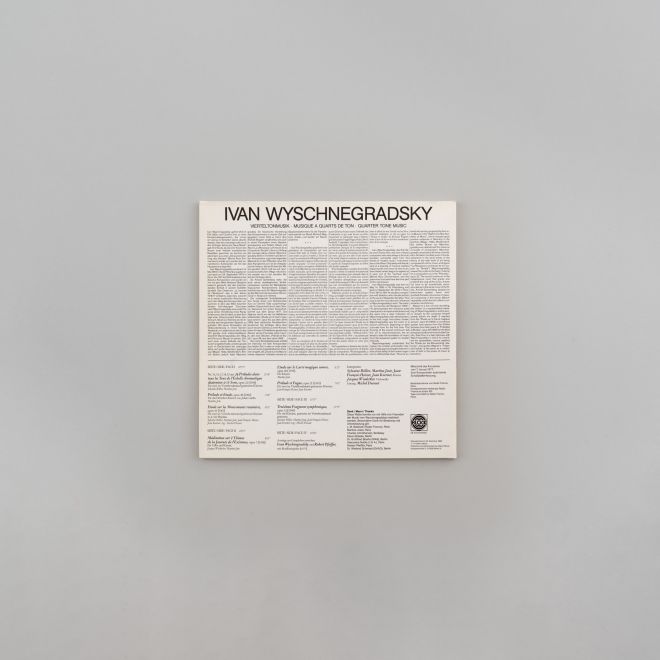
Nos. 14, 16, 17, 18, 19 from 24 Préludes dans tous les Tons de l’Échelle chromatique diatonisée à 13 Sons, opus 22 (1934) (For two pianos tuned in quarter-tone intervals); Prélude et Etude, opus 48 (1966) (for Julian Carillo’s third-tone piano); Etudes sur les Mouvements rotatoires, opus 45 (1961) (for two pianos tuned in quarter-tone intervals, each for four hands); Méditation sur 2 Thèmes de la Journée de l’Existence, opus 7 (1958) (for cello and piano); Etude sur le Carré magique sonore, opus 40 (1956) (for piano); Prélude et Fugue, Opus 21 (1934) (for two pianos tuned in quarter-tone intervals); Troisième Fragment symphonique, opus 32, (1946) (for four pianos, tuned in pairs in quarter-tone intervals)
Performers:
Sylvaine Billier, Martine Joste, Jean-François Heisser, Jean Koerner, piano
Jacques Wiederker, cello
Conductor: Michel Decoust
Excerpts from conversations between
Ivan Wyschnegradsky and Robert Pfeiffer, with musical examples (1977)
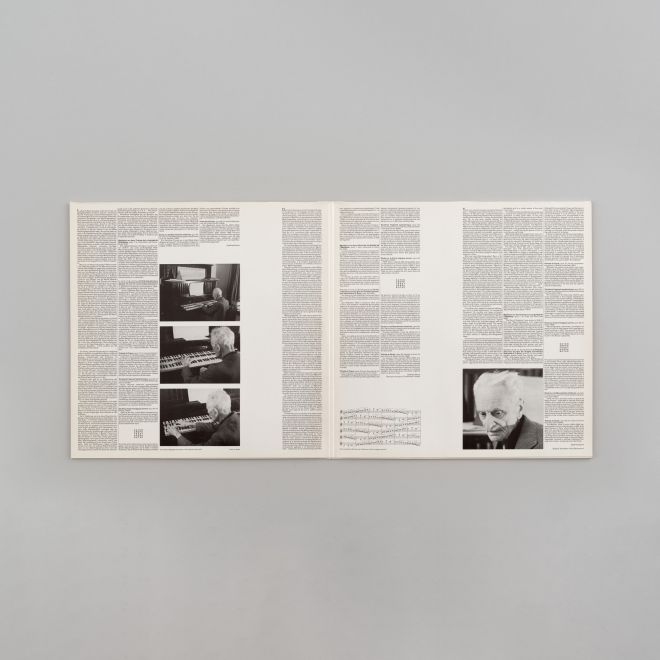
“Like Erik Satie and Charles Ives, Ivan Wyschnegradsky belongs to a generation of composers who always remained somewhat in the shadows, apart from what was considered “new music” in the 1920s and 1950s. Only today […] are these supposed outsiders recognized as part of the mainstream.
Ivan Wyschnegradsky was born on May 14, 1893, in Saint Petersburg and died on September 29, 1979, in Paris. From 1911 to 1914, he studied composition with Sokolov, who introduced him to the work of Alexander Scriabin, which had a decisive influence on his own compositions. […]
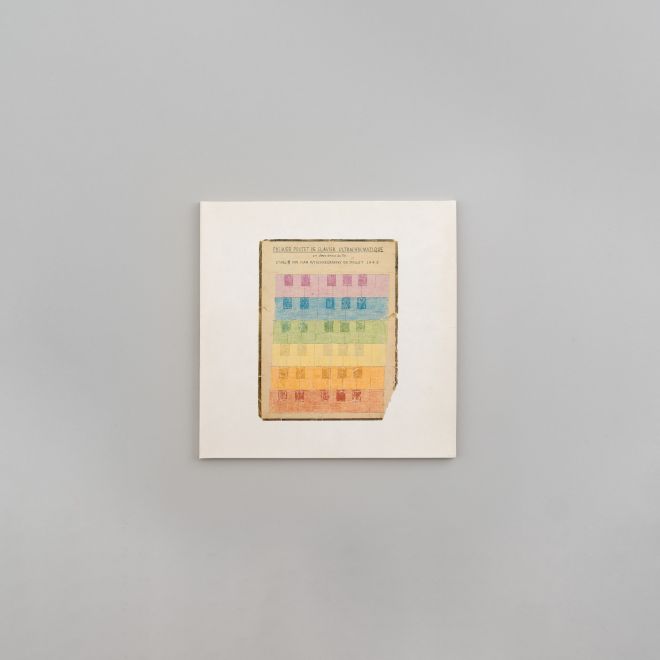
With his concept of dividing the octave into ever smaller intervals, ultimately down to those just discernible to the ear, Wyschnegradsky followed the path that Ferruccio Busoni had projected in his “Draft of a New Aesthetic of Music,” which had met with great resonance in Germany in the 1920s […]. Like Busoni, however, Wyschnegradsky never abandoned the classical idea of composition, always remaining committed to Scriabin’s example, as well as to his concept of a Gesamtkunstwerk of colors, music, and space (La Mosaique Lumineuse de la Coupole du Temple), which he noted down in the early 1940s. […]
This record edition presents a cross-section of the composer’s oeuvre compiled shortly before his death, based on a concert recording from 1977. The span ranges from the semitone-based Etude sur le Carré magique sonore, opus 40, from 1956, to numerous quarter-tone compositions from the 1930s and more recent times, to a composition for the piano tuned in third tones by his friend Julian Carillo, the two pieces Prélude et Etude, opus 48, from 1966.
The fourth side of the record contains an interview with the composer […], in which he discusses, among other things, his synesthetic visions, explains Etude sur les Mouvements rotatoires, and, as a profession of faith in the transformative power of music, plays Richard Wagner’s Tristan und Isolde on the piano.”
(Excerpt from the cover text of the LP Ivan Wyschnegradsky. Vierteltonmusik, Edition Block, 1983)