Bülent Sangar
ISIMSIZ
2005
EB68
Portfolio with 8 offset prints after photographs by the artist
80 x 55 cm each
Edition of 35 + 5 AP, all sheets signed and numbered
Portfolio: 1200 Euro
Single sheets: 200 Euro
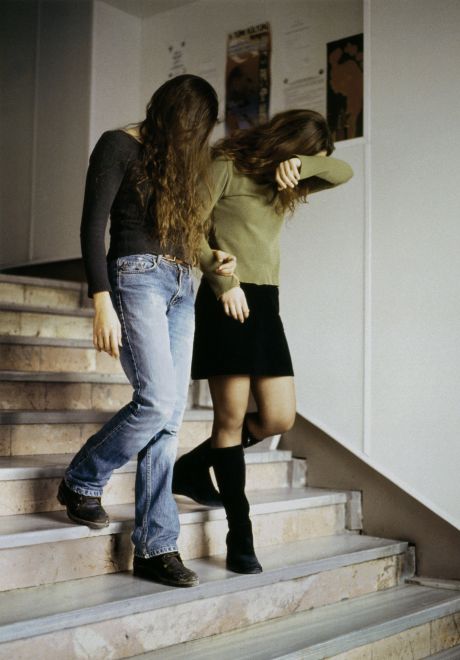
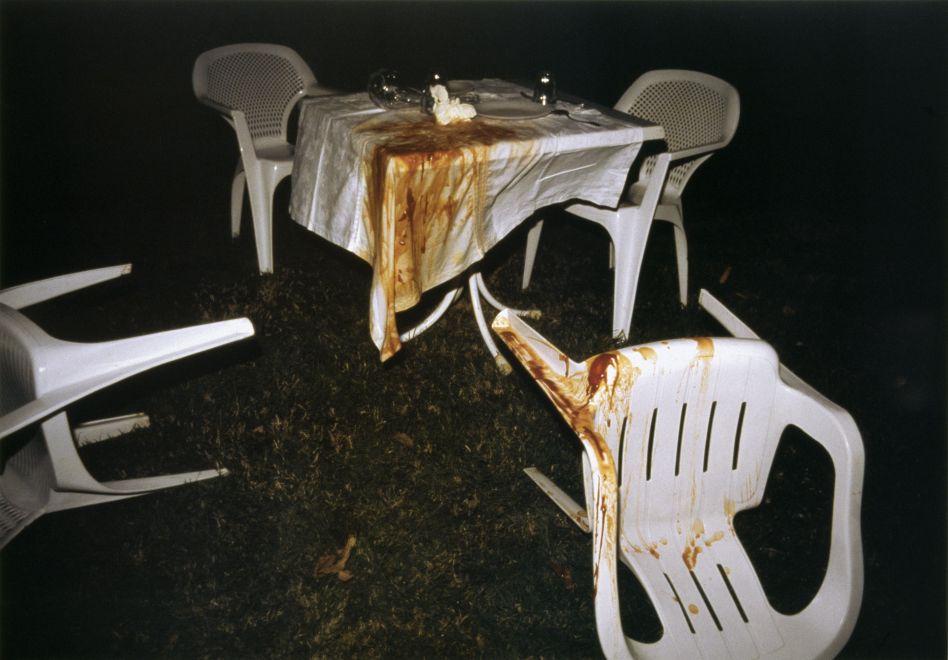
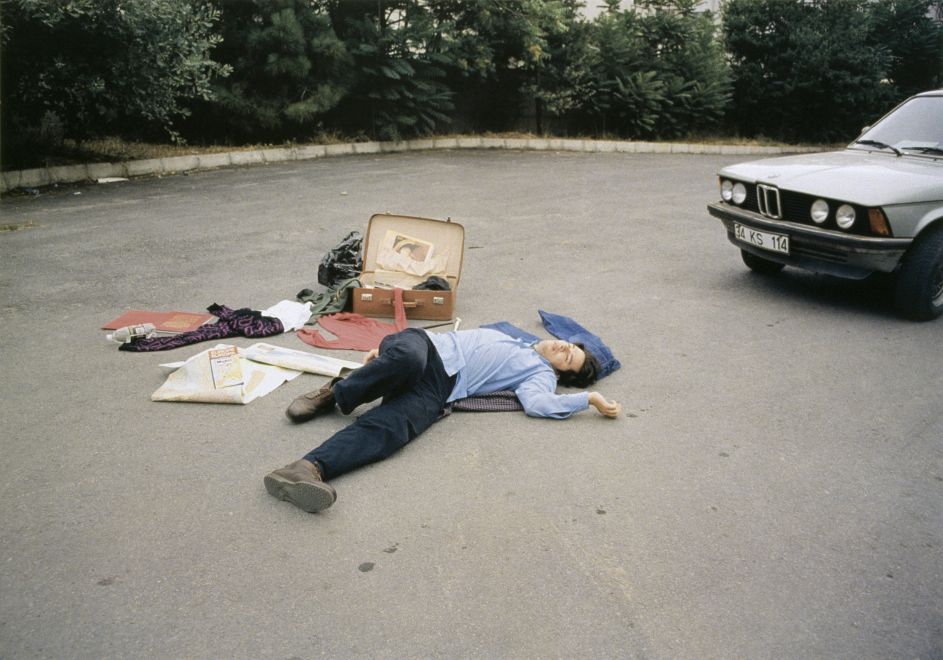
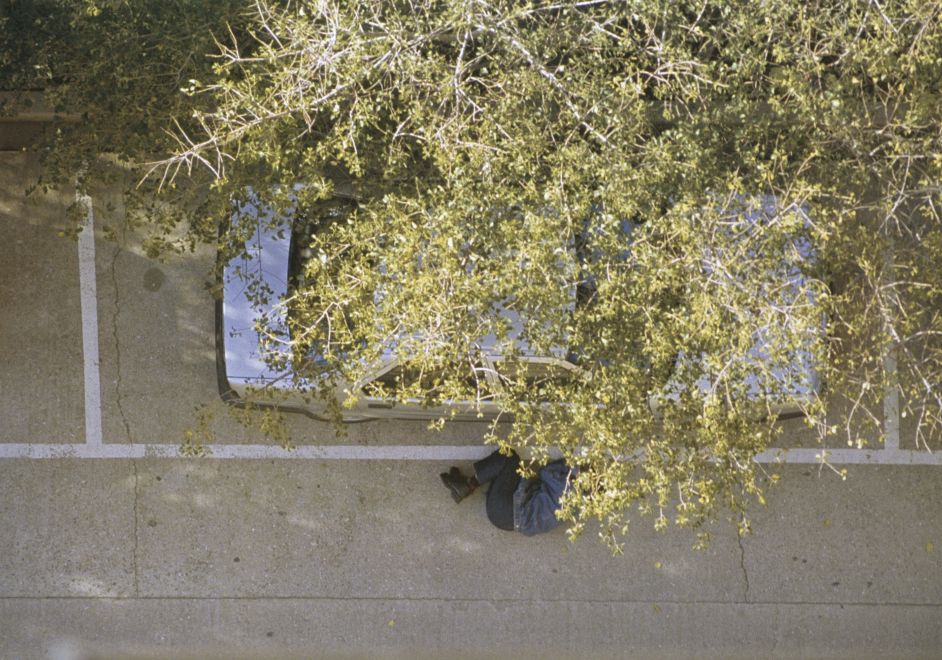
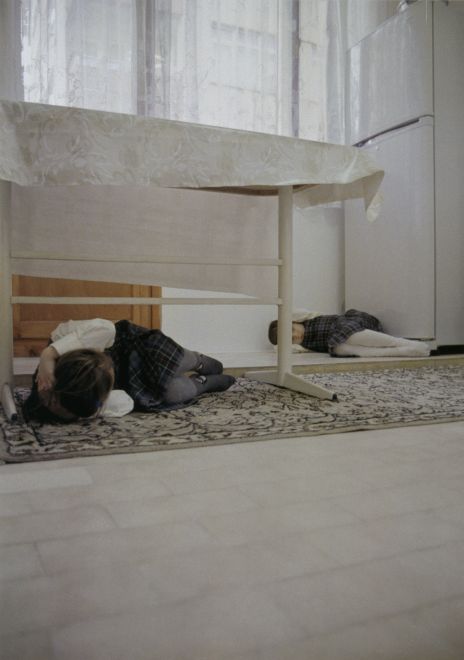
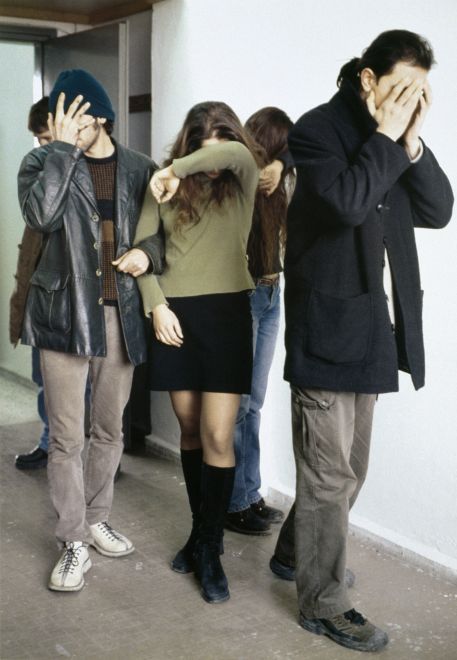
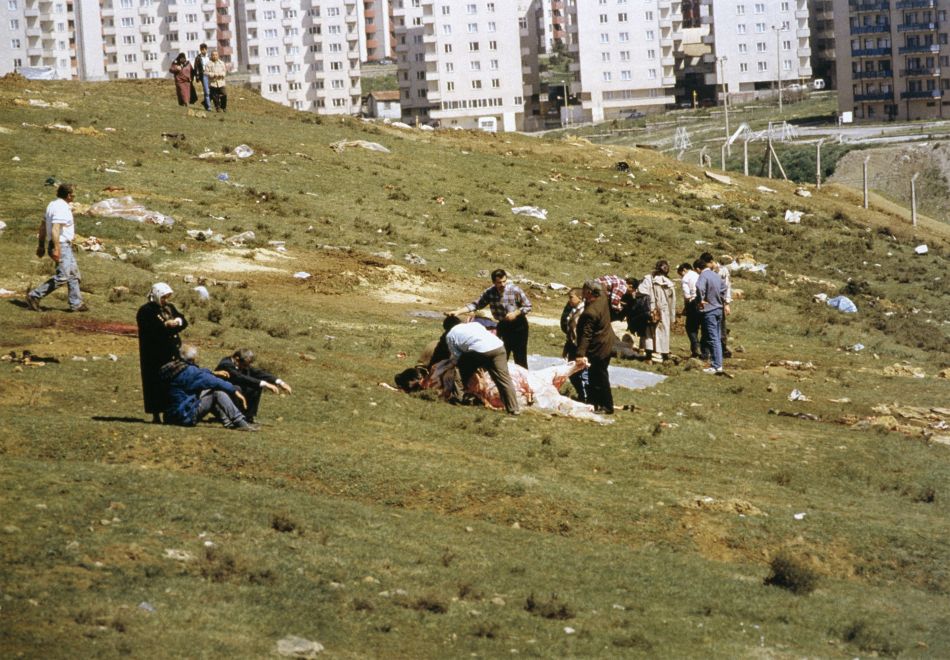
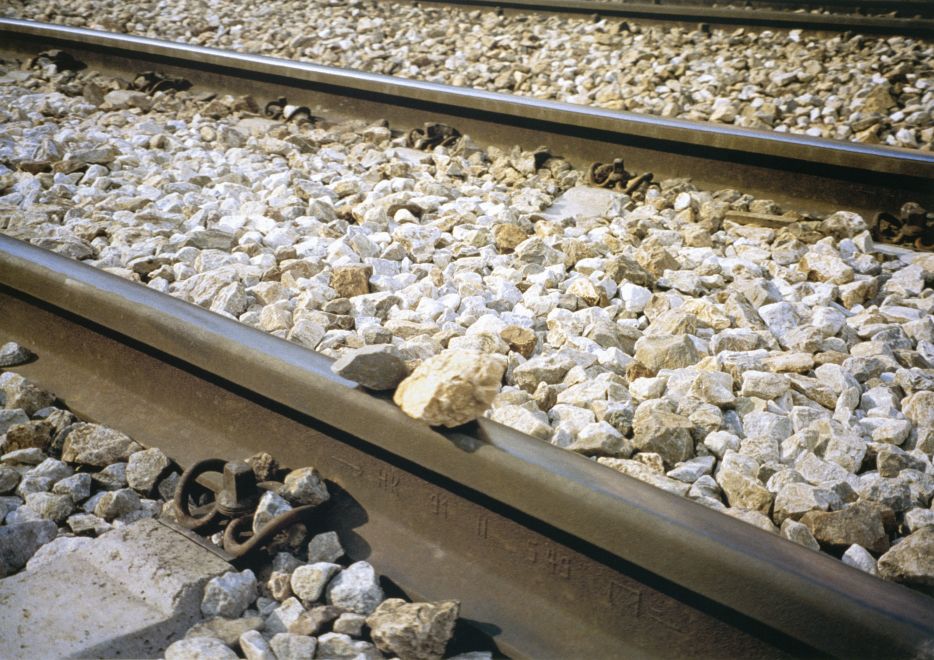
The collaboration with Bülent Şangar began in 1998 with the exhibition İskorpit. Aktuelle Kunst aus Istanbul (İskorpit. Contemporary Art from Istanbul), curated by René Block and Fulya Erdemci at the Haus der Kulturen der Welt in Berlin, and continued throughout many projects up to the 9th volume of the twelve-volume monograph series Türkiye’de Güncel Sanat published by YKY Istanbul in 2009. The graphic portfolio ISIMSIZ had already been published four years earlier. The name often used by Şangar translates as “Untitled” and refers to the deliberately open narratives of his photographic productions. The portfolio contains eight offset prints after photographs by the artist from various series of works from the late 1990s to the early 2000s, in which Şangar recreates his motifs, which often originate from newspaper photographs, with people from his closest circle of friends in countless repetitions: Moments of disturbing ambiguity suggest traces of crime, accidents, state, domestic or sexual violence. In Şangar’s works, the terror that dominated public life in Turkey in the mid-1990s increasingly spills over into the family space, which is characterized by solidarity and community as well as constriction and hierarchies, and whose security is increasingly called into question. A central theme in the artist’s early work is ritual sacrifice and its religious, mythological and social meanings. However, the sheet from the series Feast of Sacrifice (1997-99) is not a staging, but rather an anthropologically documented scene of a sacrificial feast from a distance: on the hills in front of the backdrop of Istanbul’s high-rise buildings, animals are slaughtered and dismembered between highways. Tradition and modernity collide in the appropriation of urban space. Two pictures in the portfolio show young people in a stairwell and in a hallway, hiding their faces with their hands, arms or hair. As if they wanted to protect themselves from a condemning, even criminalizing camera, which establishes a connection between the brutal police violence and the pornographic gaze of the event-hungry, post-political and corrupt mass media (Suret, 2003/04) – another recurring motif. Other sheets show children and adults crouching on the floor in fetal poses indoors and outdoors, as if to protect themselves from a natural disaster (from the series Meanwhile, 2003/04, and Birds-Eye View, 2002/04), others suggest the remains or harbingers of events in semi-documentary scenes, which remain unspoken: fallen plastic chairs around a table smeared with blood or ketchup, stones on train tracks (both from The Dark Past Series, 2002-04). In eerie, never unambiguous images, Bülent Şangar evokes the latent violence that permeates the social fabric of everyday Turkish life.
Text: Eva Scharrer