Portfolio

Love It or Leave It

2005

EB66

Linen cassette with prints by 30 artists
70 x 100 cm each

Edition of 100
Edition A: 55 copies, signed and numbered (1/55 – 55/55, all in portfolios)
Edition B: 35 copies (numbered I/XXXV-XXXV/XXXV)
10 copies as artists proofs (numbered AP 1/10-AP 10/10)

Edition A: 16.000 Euro
Edition B: selected prints available individually
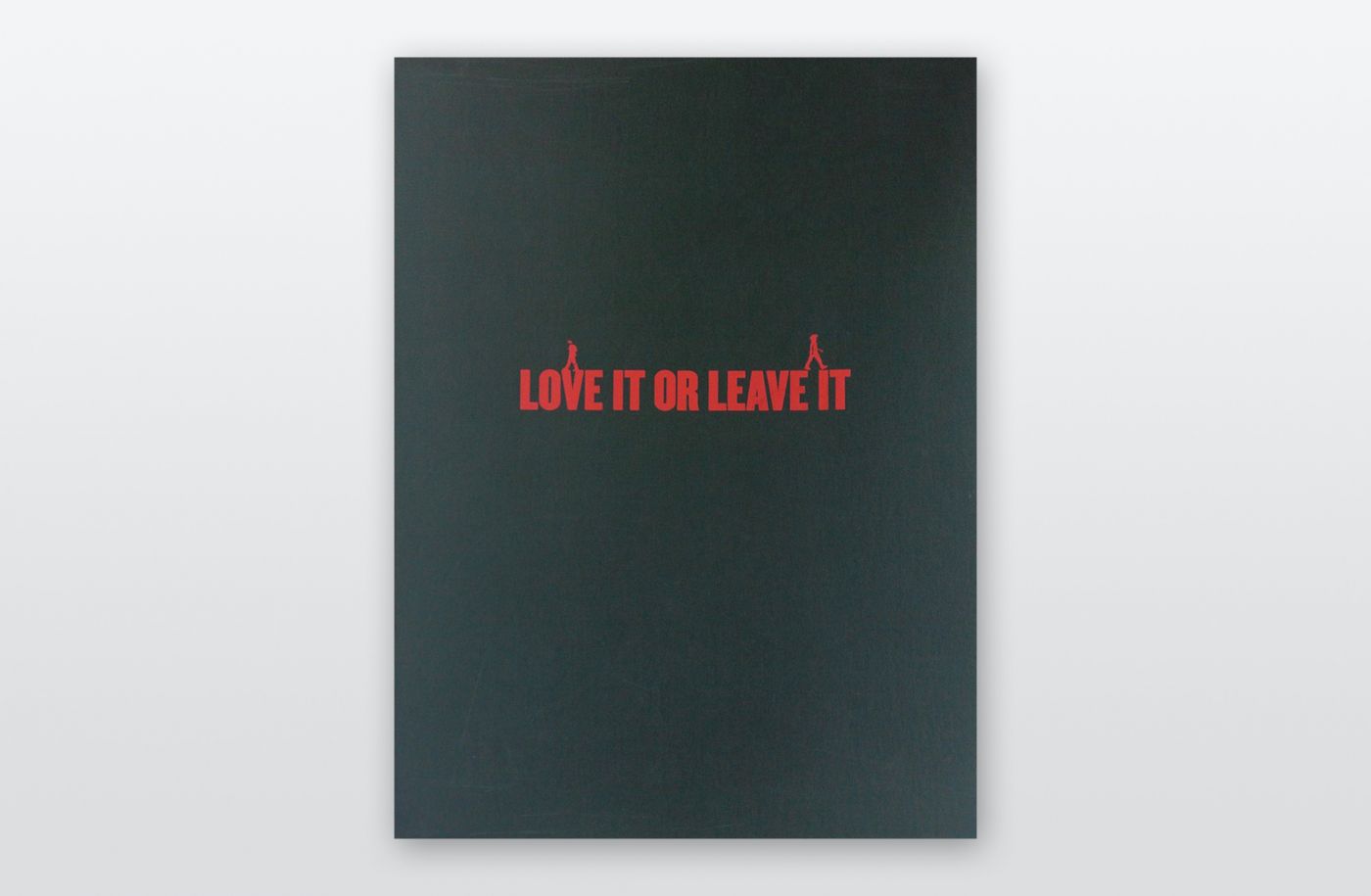
A dark green linen box lies on a gray background. Written on it in red are the words: LOVE IT OR LEAVE IT.
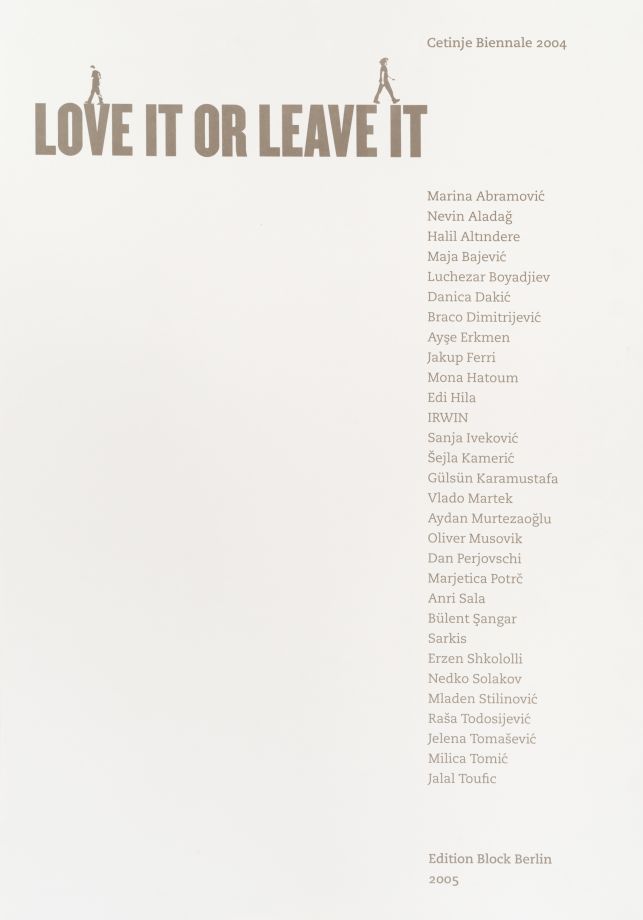
Title page of the print portfolio Love It Or Leave It, printed in light brown on beige. The title in bold at the top right, the artists are listed on the left side, below is Edition Block Berlin, 2005
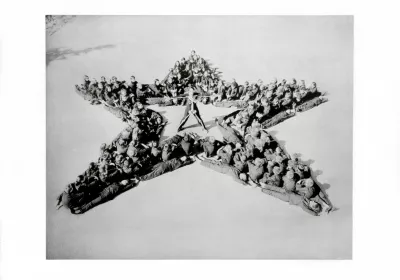
Photogravure by the artist Marina Abramovic. Black-and-white photo of dozens of children dressed as soldiers lying down in sitting in formation to create a large five-pointed star shape on the ground, viewed from above. Marina Abramovic stands in the middle of the star with stretched out arms and legs wearing black clothes with a skeleton attached on the front.
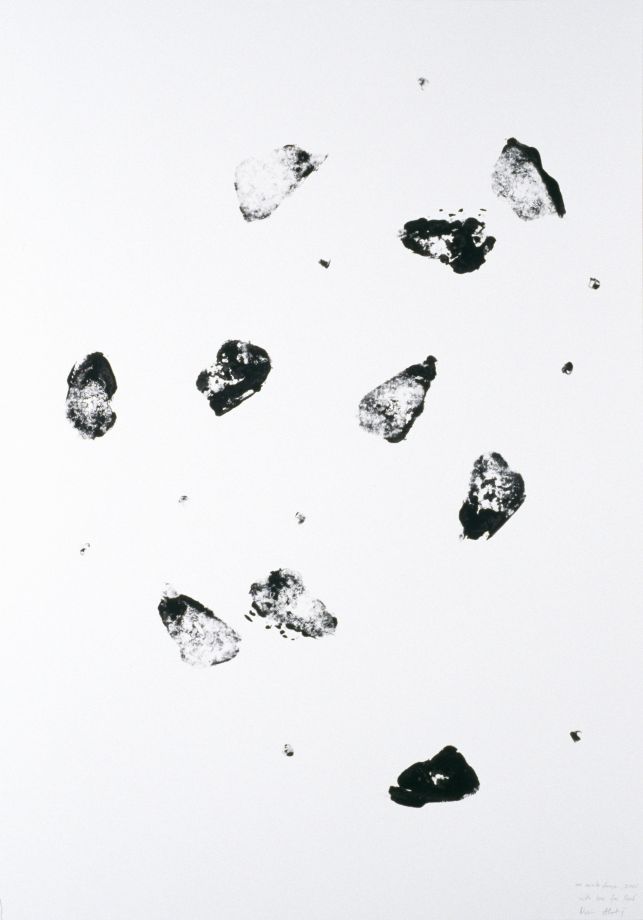
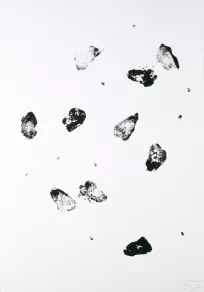
Work by Nevin Aladag. Shoe prints from stilettos in the shape of abstract black ink blotches and smudges scattered across a white background.
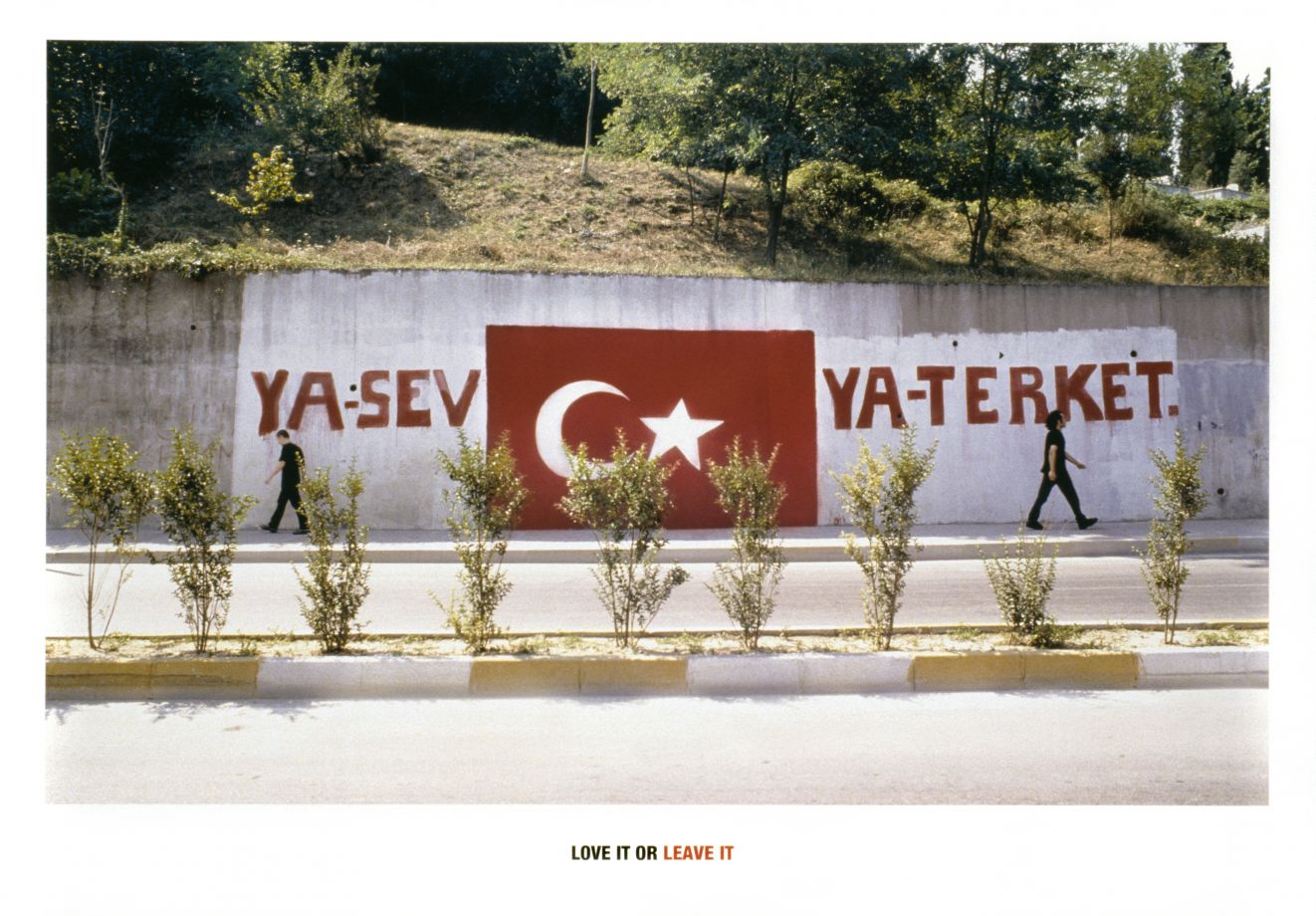
A work by artist Halil Altindere. A grafitto on a roadside wall features the Turkish flag and the words YA SEV YA TERKET, English Love it or leave it, in large letters. Two men walk along the sidewalk in opposite directions.
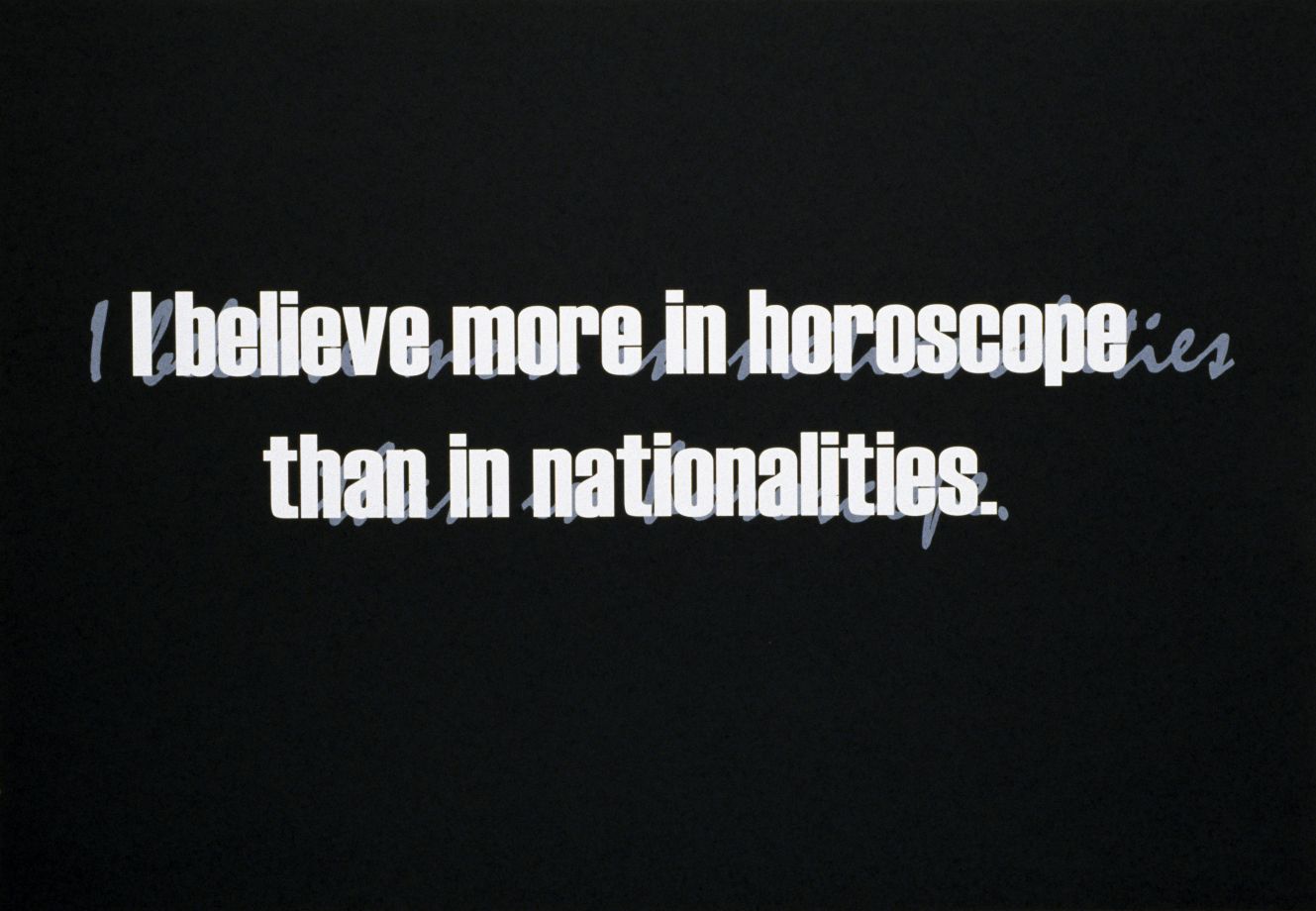
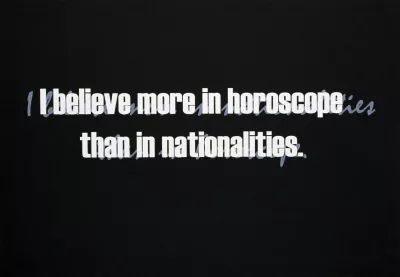
A graphic by artist Maja Bajevic showing white text on a black background reading I believe more in horoscope than in nationalities. A faint handwritten script is barely visible behind the bold text, reading I believe more in nationalities than in horoscope.
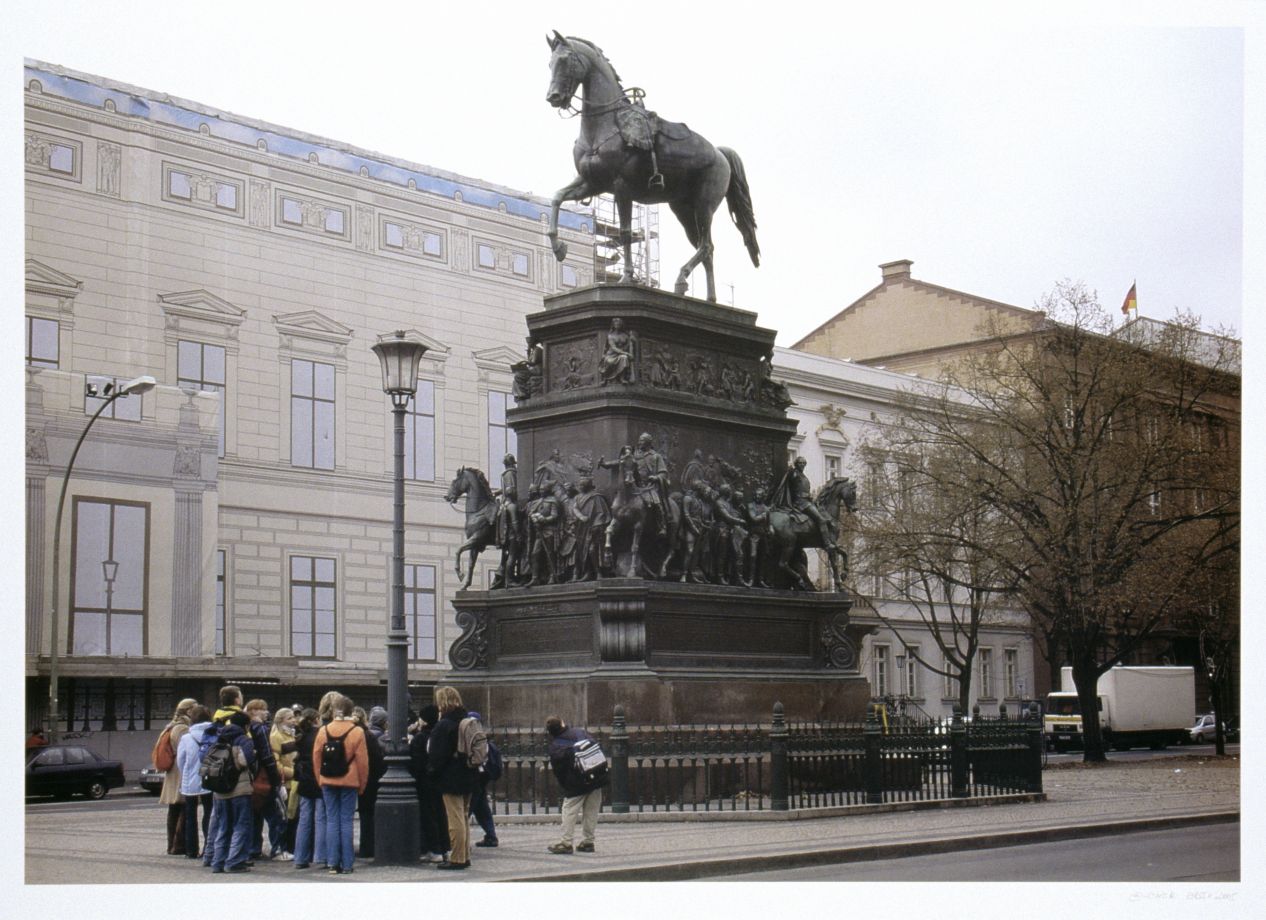
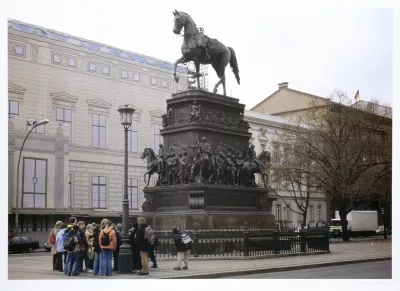
Offset print by the artist Luchezar Boyadjiev, showing the equestrian statue of Frederick the Great on Unter den Linden in Berlin. A group of tourists is standing in front of the monument. Frederick the Great himself has been retouched out of the photo; only the horse can still be seen.
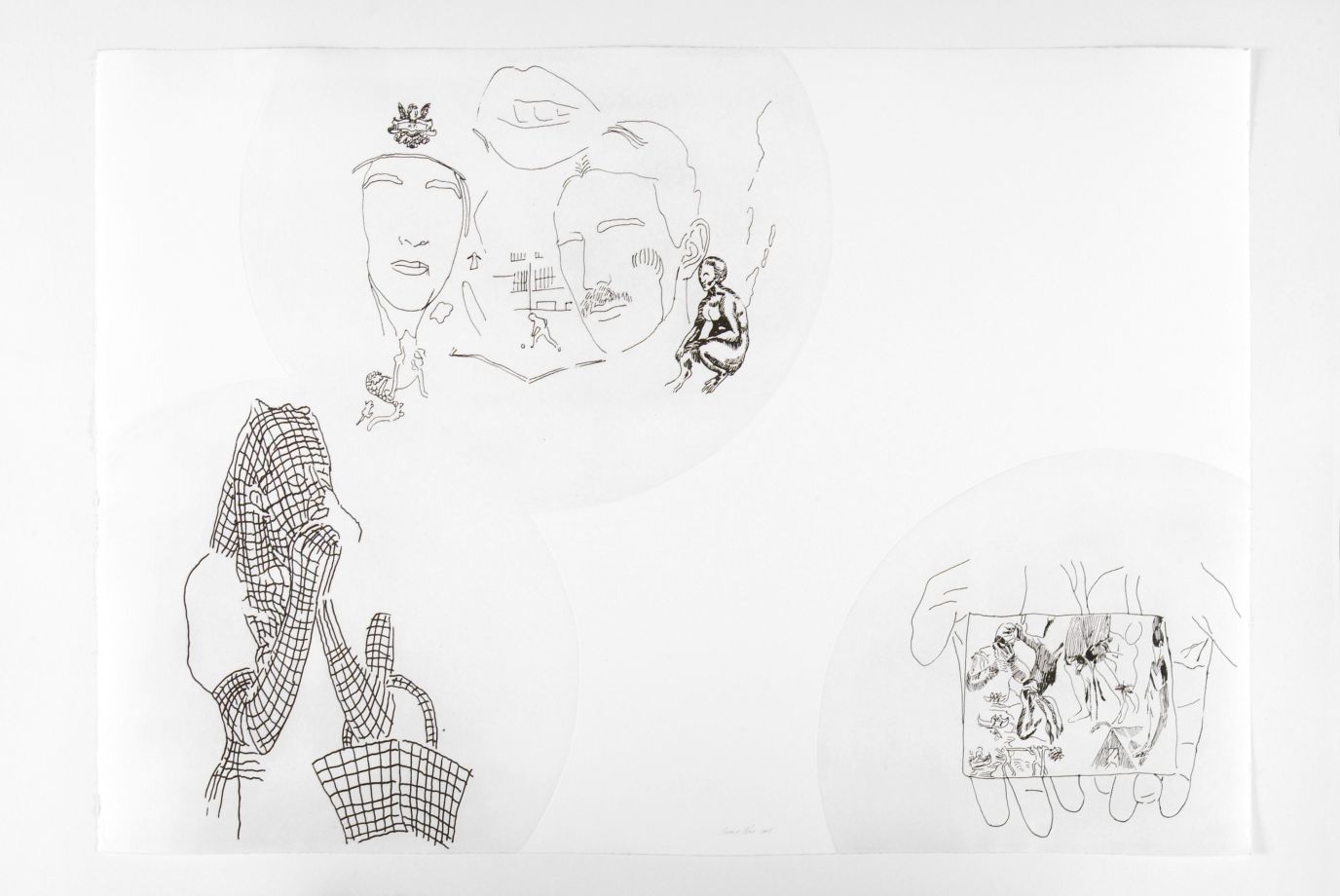
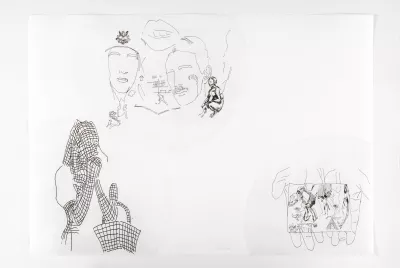
Etching by Danica Dakic. 3 drawings on a white background in slightly contrasting circles: two hands holding a photograph, fragmented figures and a female figure
Print by Braco Dimitrijevic. On the left side is a black/white portrait of an unknown woman. on the right side a short text STORY ABOUT TWO ARTISTS. At the bottom it reads: STATUS POST HISTORICUS, CASUAL PASSER-BY I MET AT 11.23 PM 2005
Print by the artist Ayse Erkmen. Close-up of a landmine model: a round, elongated object with a kind of handle and dull spikes against a dark blue background. Strong depth of field and highlight.
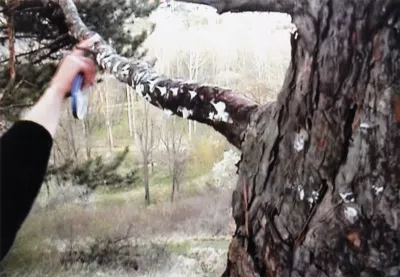
Print by the artist Jakup Ferri. A blurred style from a video shows a close-up of a tree with rugged bark. An arm reaches into the picture from the left and dabs the bark of a branch with white cream.
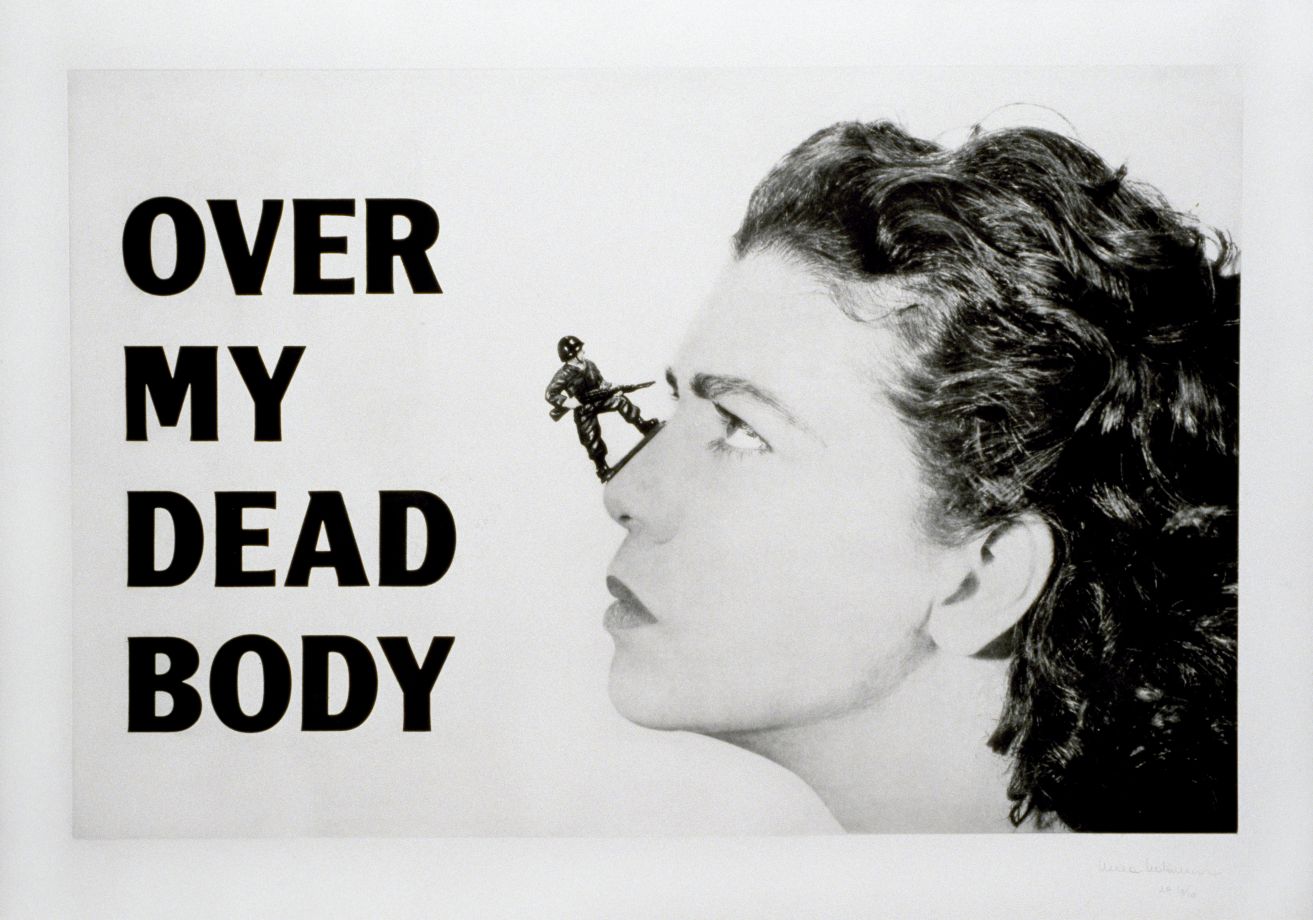
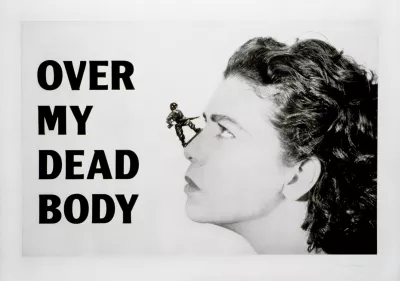
Print of Mona Hatoum. A black and white portrait of Mona Hatoum's head. On her nose is a small toy soldier with a rifle in his hands, which he is pointing at her. On the left-hand side of the image, OVER MY DEAD BODY is written in bold black
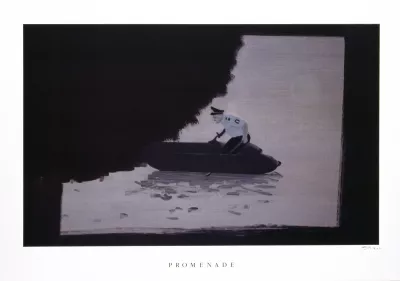
Print by Edi Hila. Reproduction of a painting in dark colors. A policeman on a small boat looks searchingly into the water, outlined in black. Below it is written PROMENADE
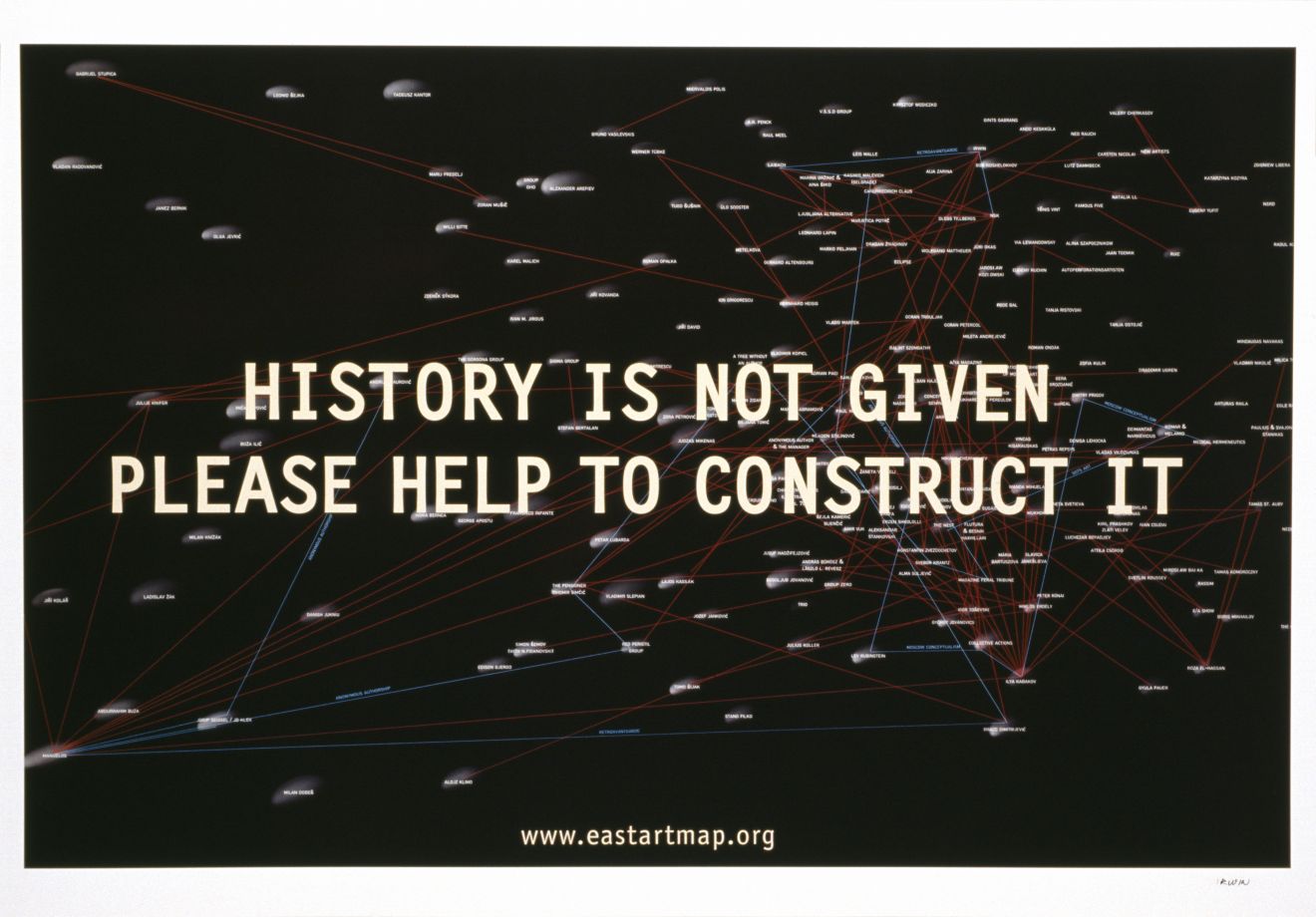
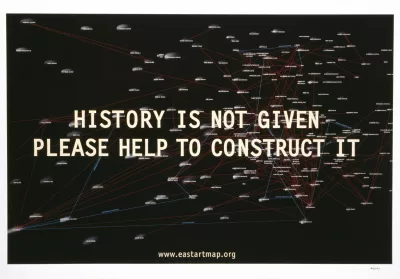
Offset print from IRWIN. A diagram on a black background. Many artists' names are linked by red and blue lines. Above it is written in large, bright letters: HISTORY IS NOT GIVEN. PLEASE HELP TO CONSTRUCT IT
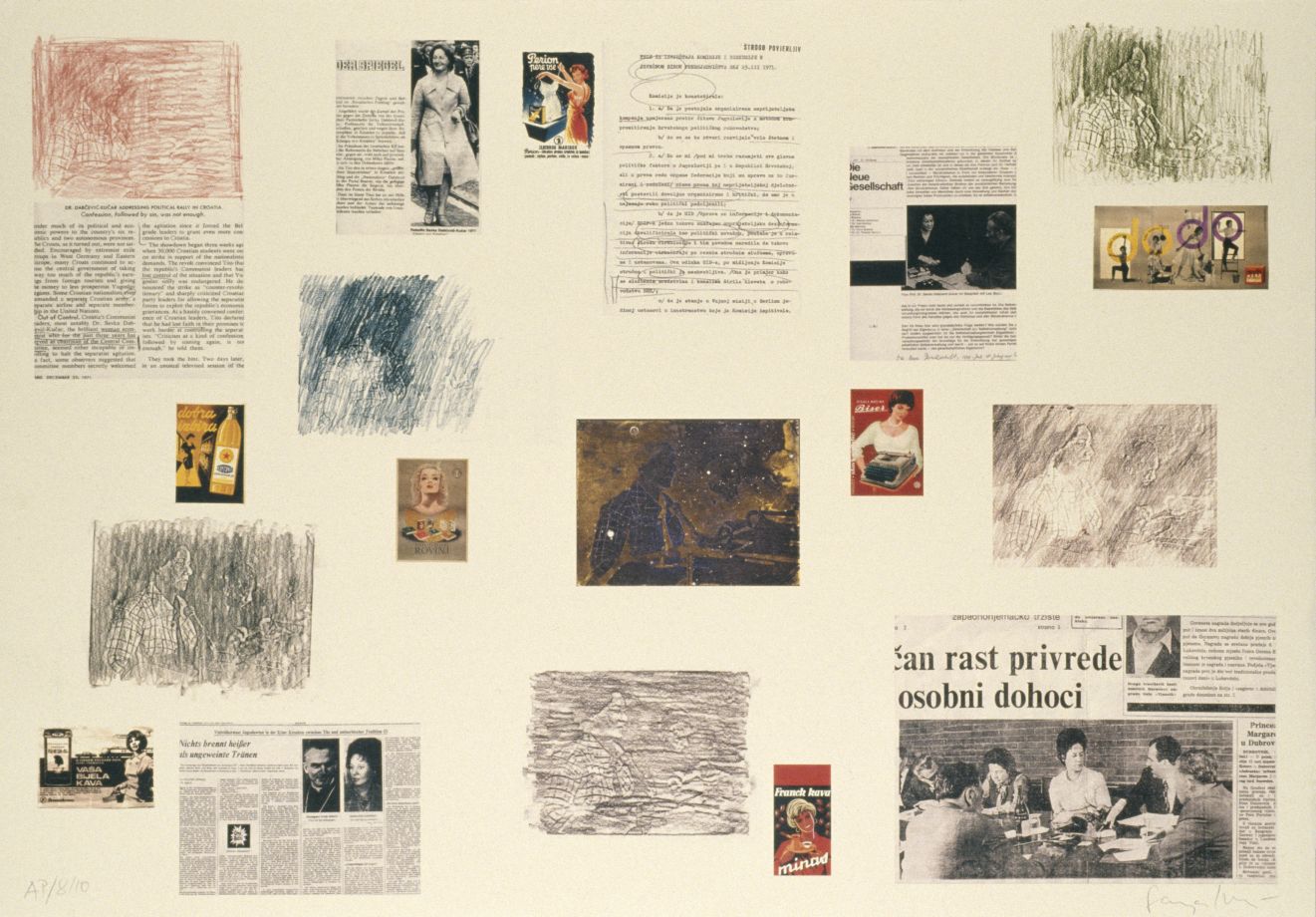
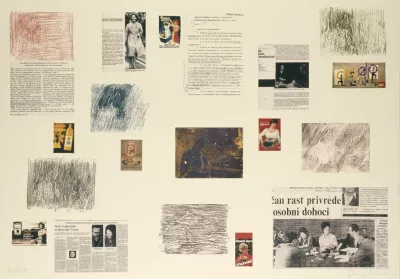
Offset print by Sanja Ivekovic. A compilation of newspaper clippings, advertising photos and overpainted photos on a light background.
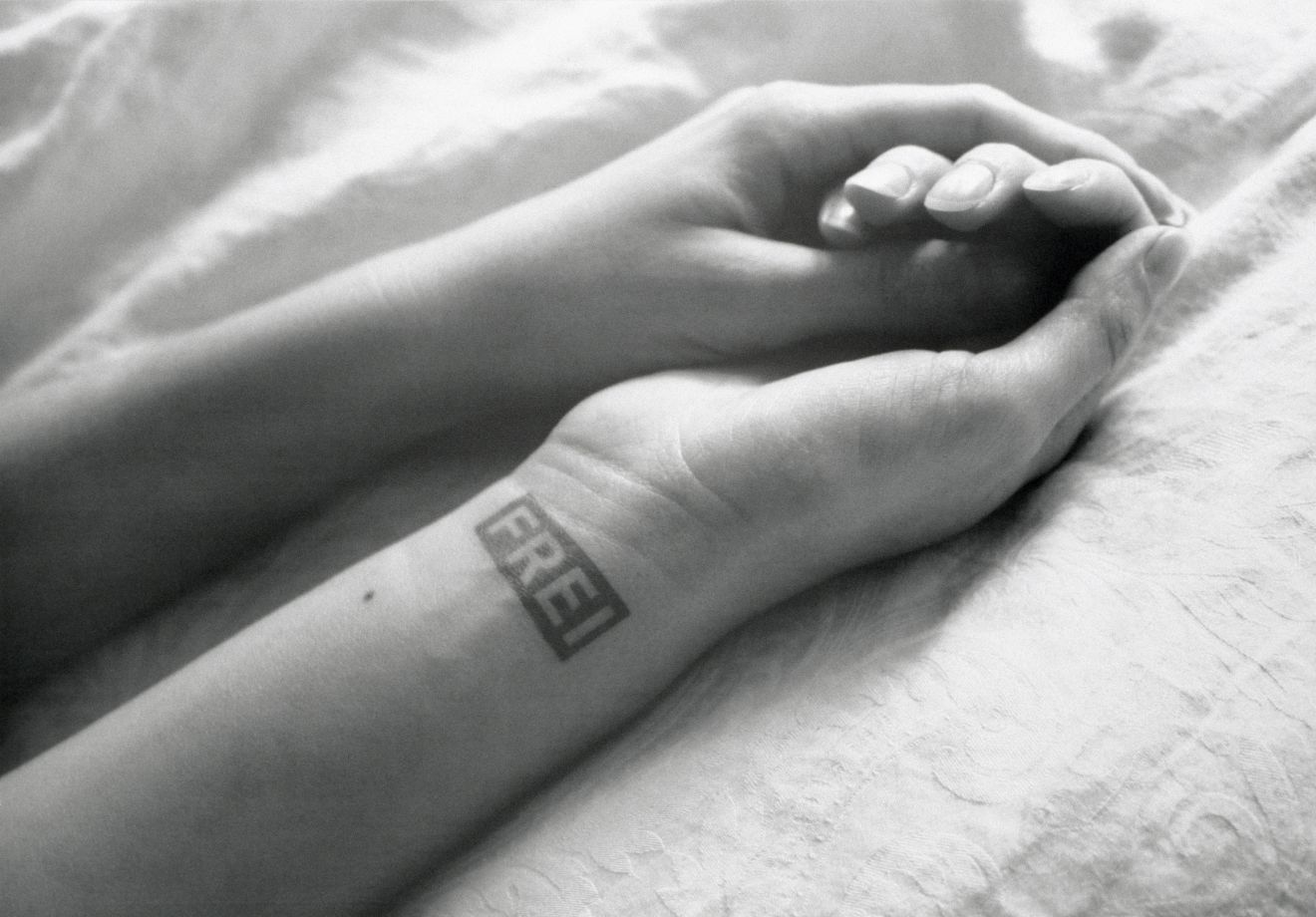
Offset print by Sejla Kameric, A black and white photo of the forearms and hands of a woman on a linen cloth. The hands are placed one inside the other. On the inside of the right wrist is a stamp that reads FREI
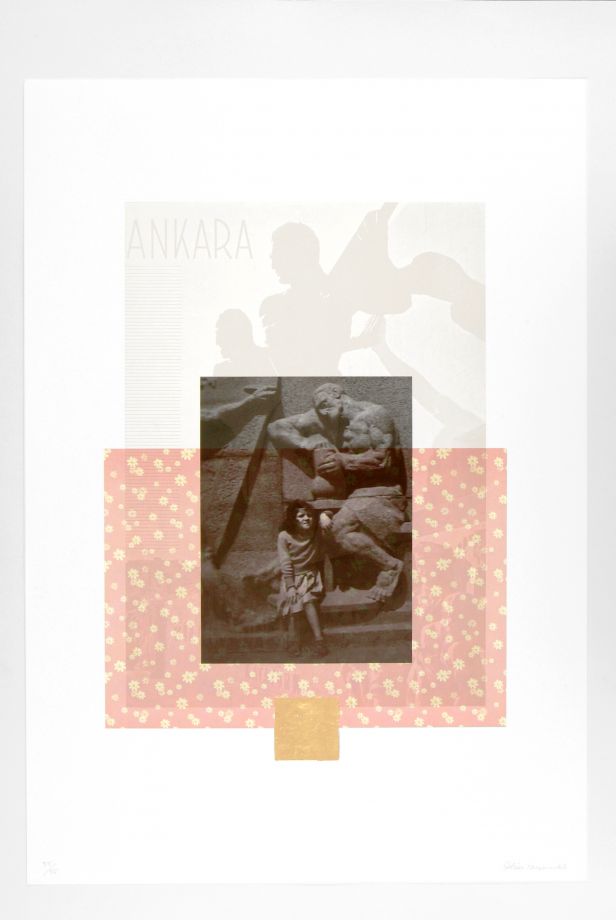
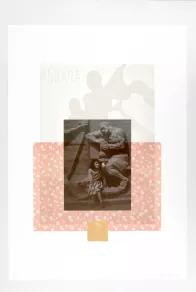
Print by Gülsün Karamustafa. Several layers superimposed. The image of a monument in Ankara, a rectangle with a pink and yellow floral pattern, above a translucent photograph of Karamustafa as a child leaning against a monument. A small square of gold leaf at the bottom.
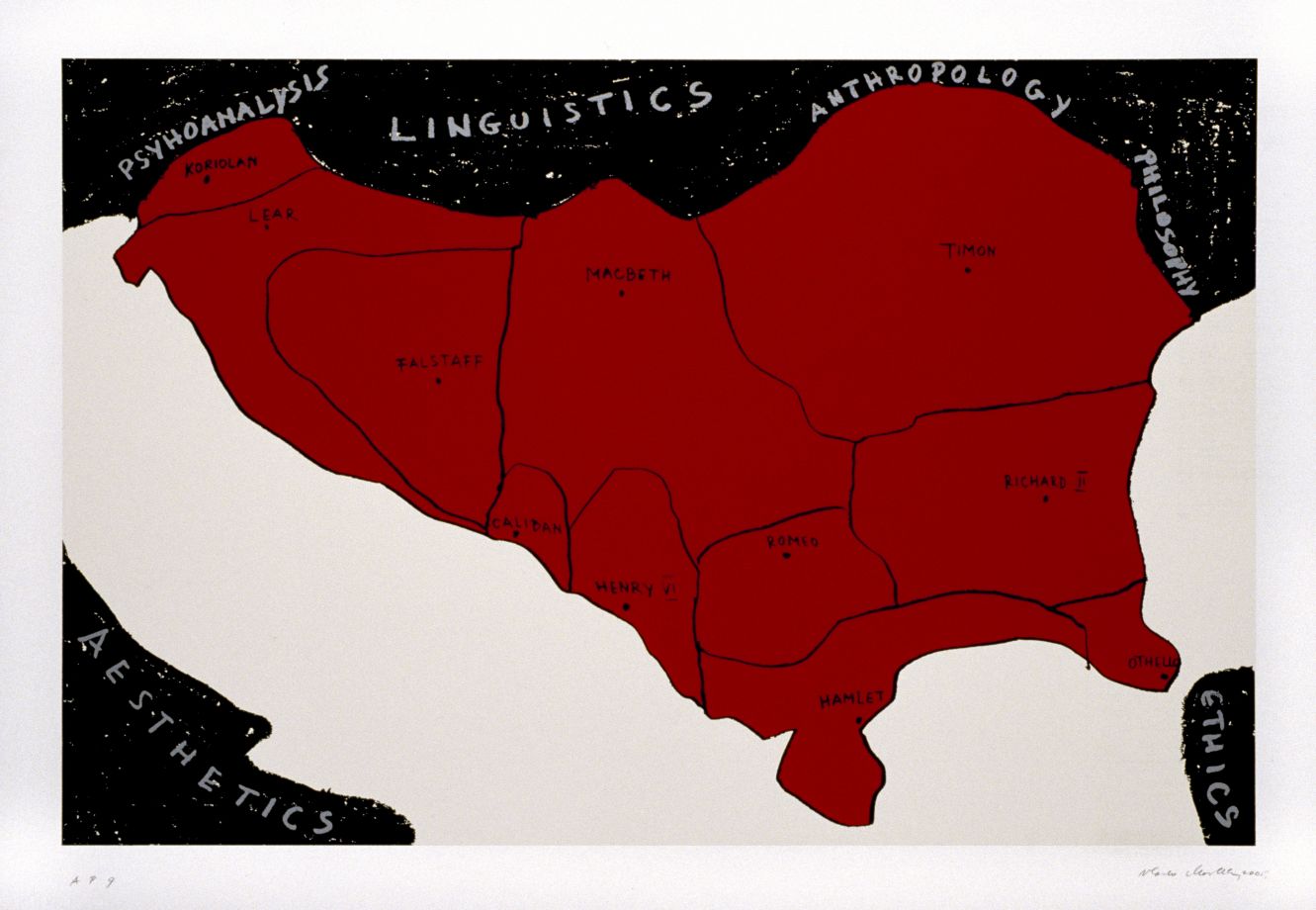
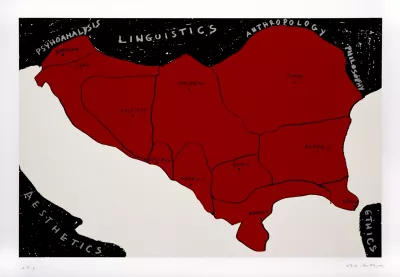
Print by Vlado Martek. A drawn map of the Balkan region. The countries are in red and their capitals are labeled with names from Shakespeare's plays.
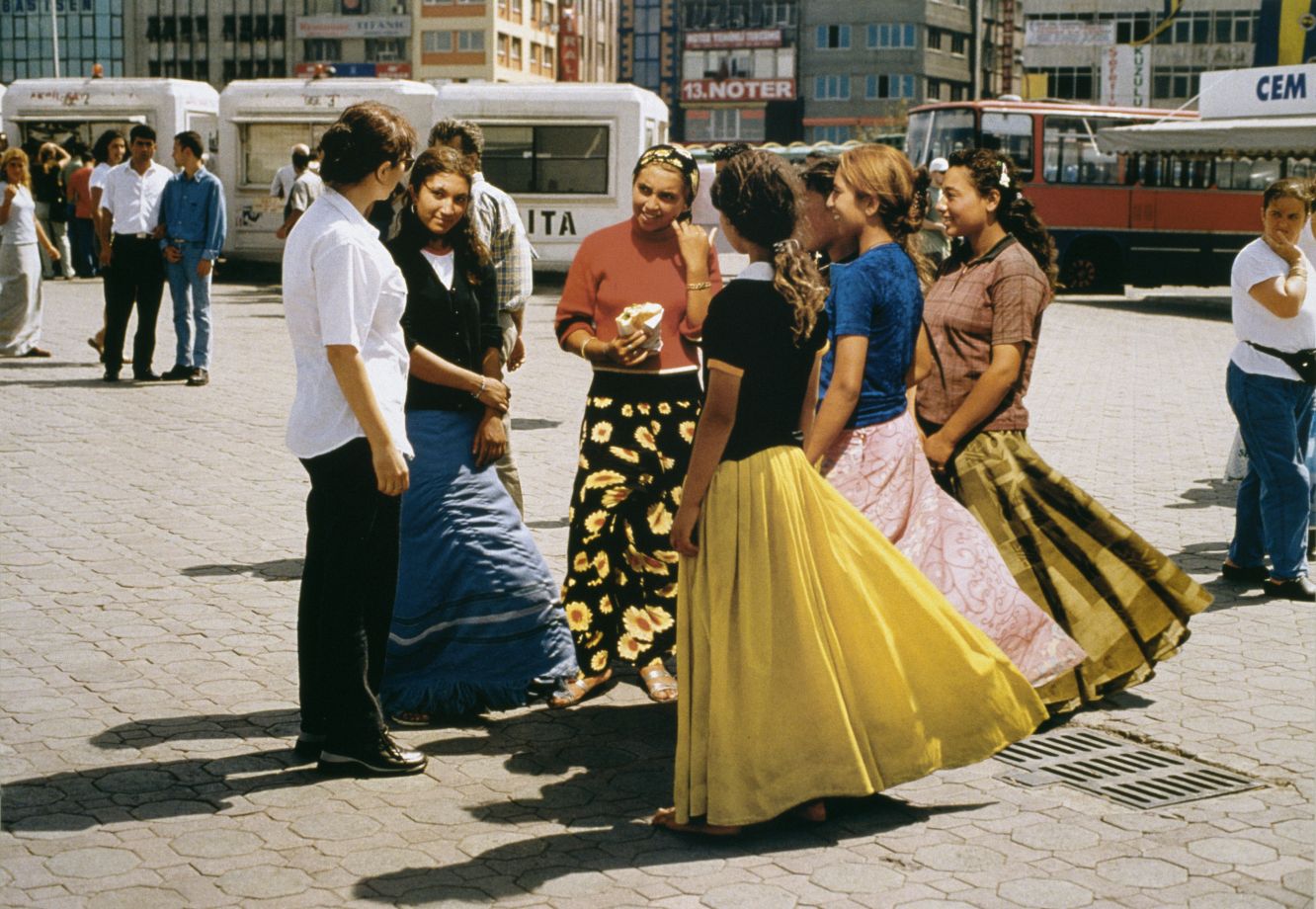
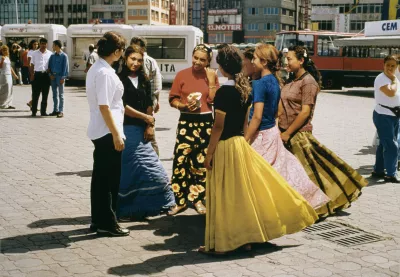
Offset print by Aydan Murtezaoglu. The artist is formally dressed in a white shirt and stands in a circle of Roma women in colorful clothing. The scene takes place on a busy Kadıköy Port Square in Istanbul.
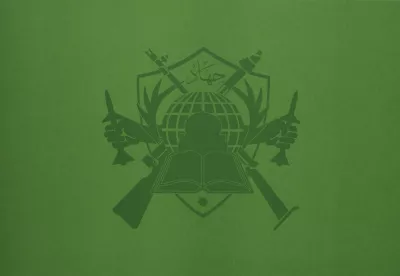
Screen print in dark green on lighter green by Oliver Musovik. A flag with superimposed symbols in the middle. With the basic color green, The Flag locates itself in Islam, while a multitude of symbols associate a new, Islamist-militant world order.
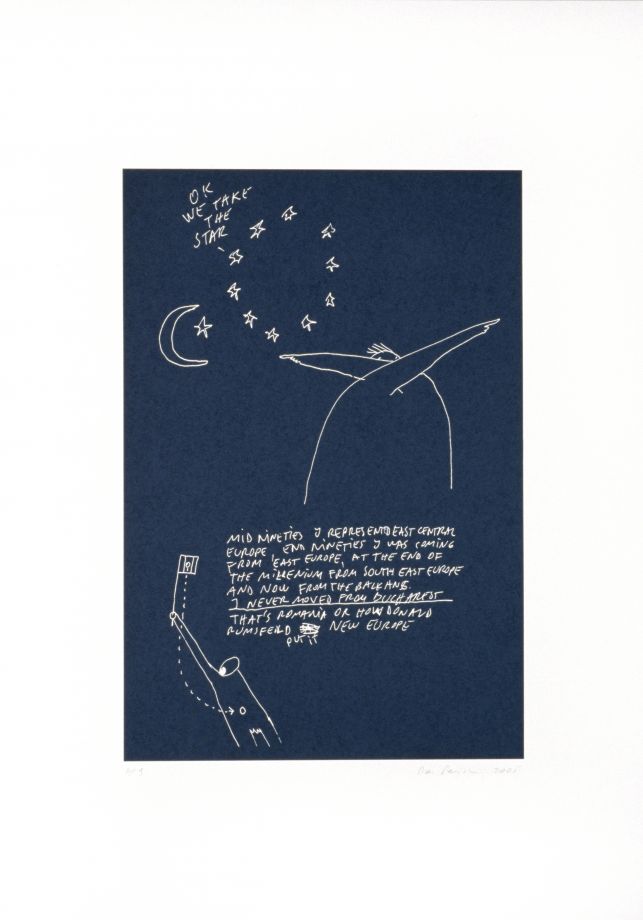
Screen print by Dan Perjovschi. A dark blue surface with a white border, on which Perjovschi has drawn and written in his typical style about the relationship between Romania and the EU.
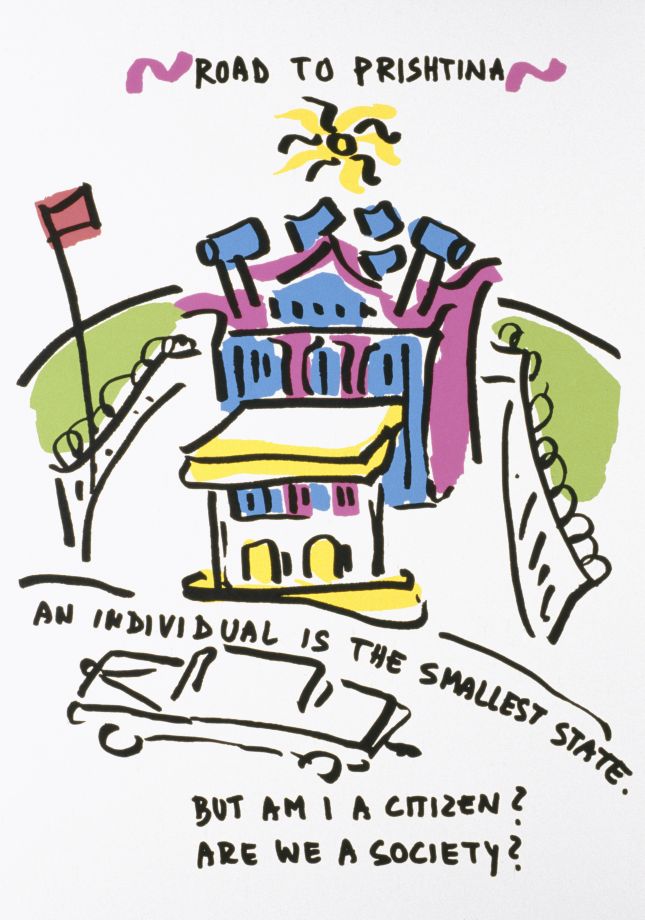
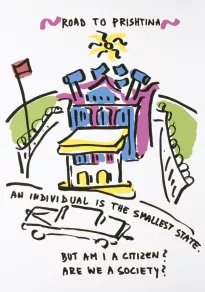
Screen print by Marjetica Potrc. Roughly colored, simple sketch of two buildings, fenced in with barbed wire. A car in front of it on the street, below it is written: AN INDIVIDUAL IS THE SMALLEST STATE. BUT AM I A CITIZEN? ARE WE A SOCIETY?
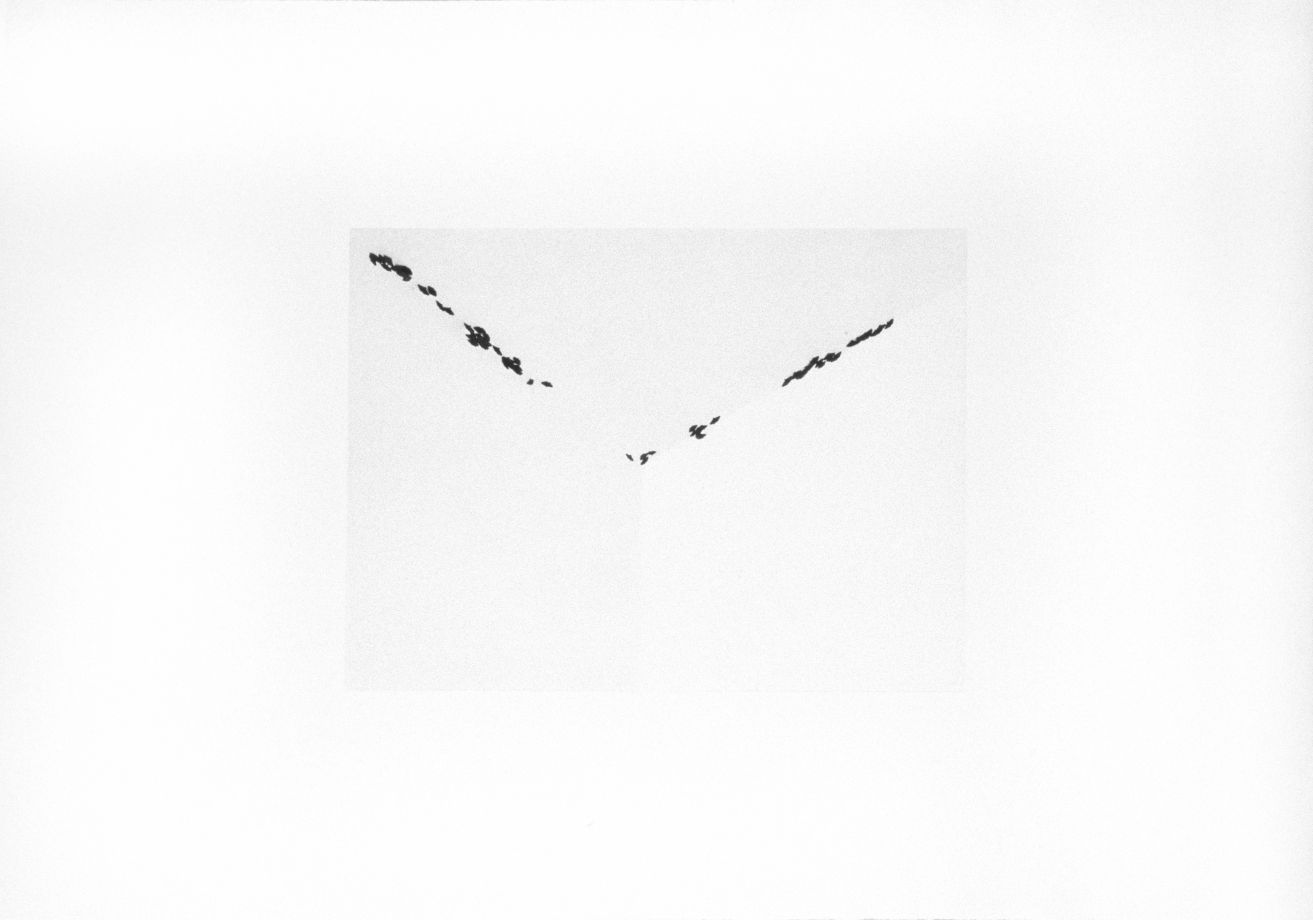
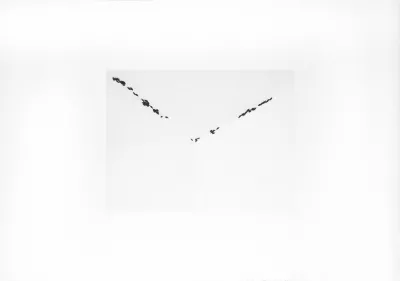
Photogravure by Anri Sala. The corner of a bright, white room, barely recognizable. Along the edges are several black shapes.
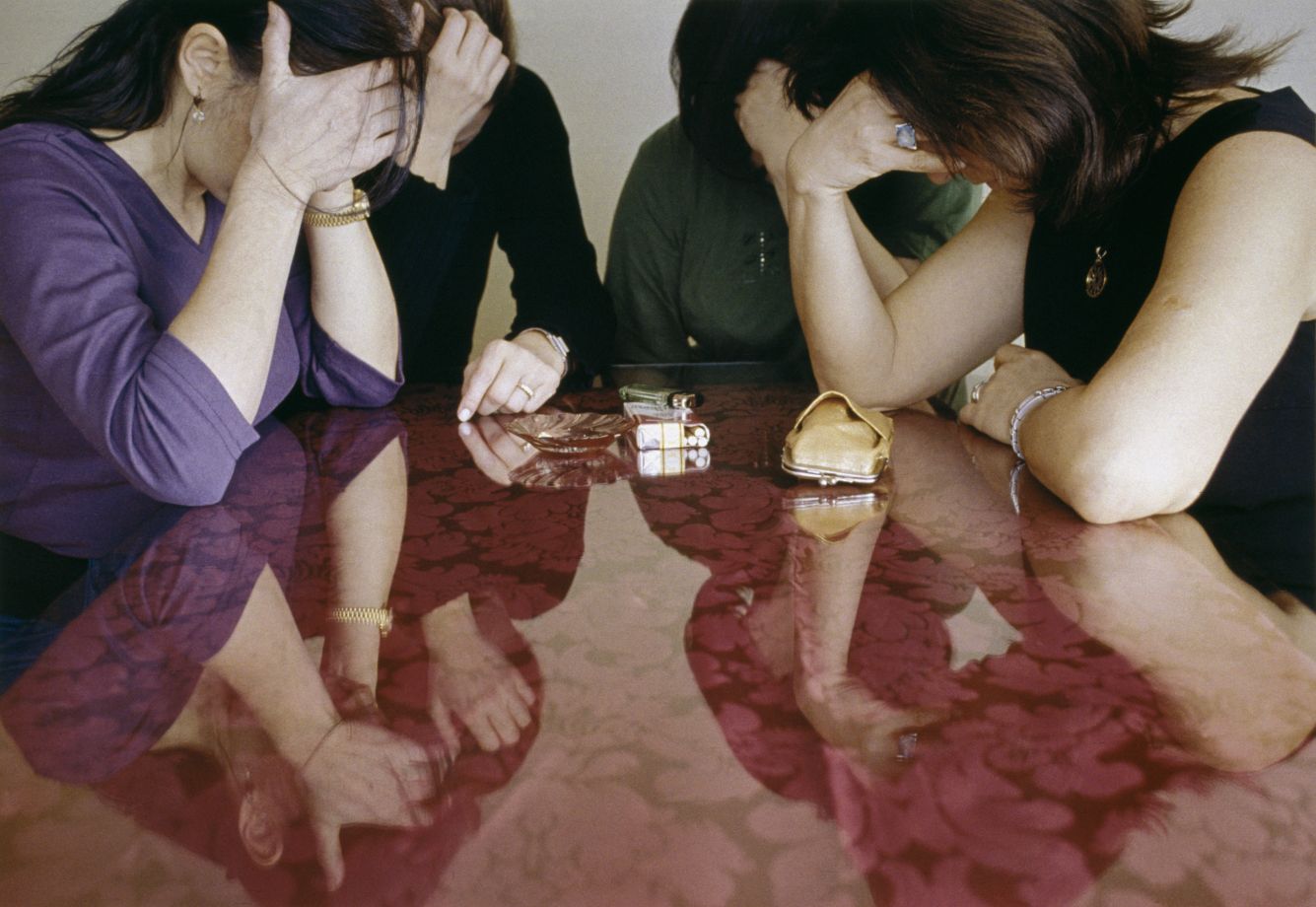
Offset print by Bülent Sangar. Four women sit at a glass table with their eyes downcast, hiding their faces with their hands.
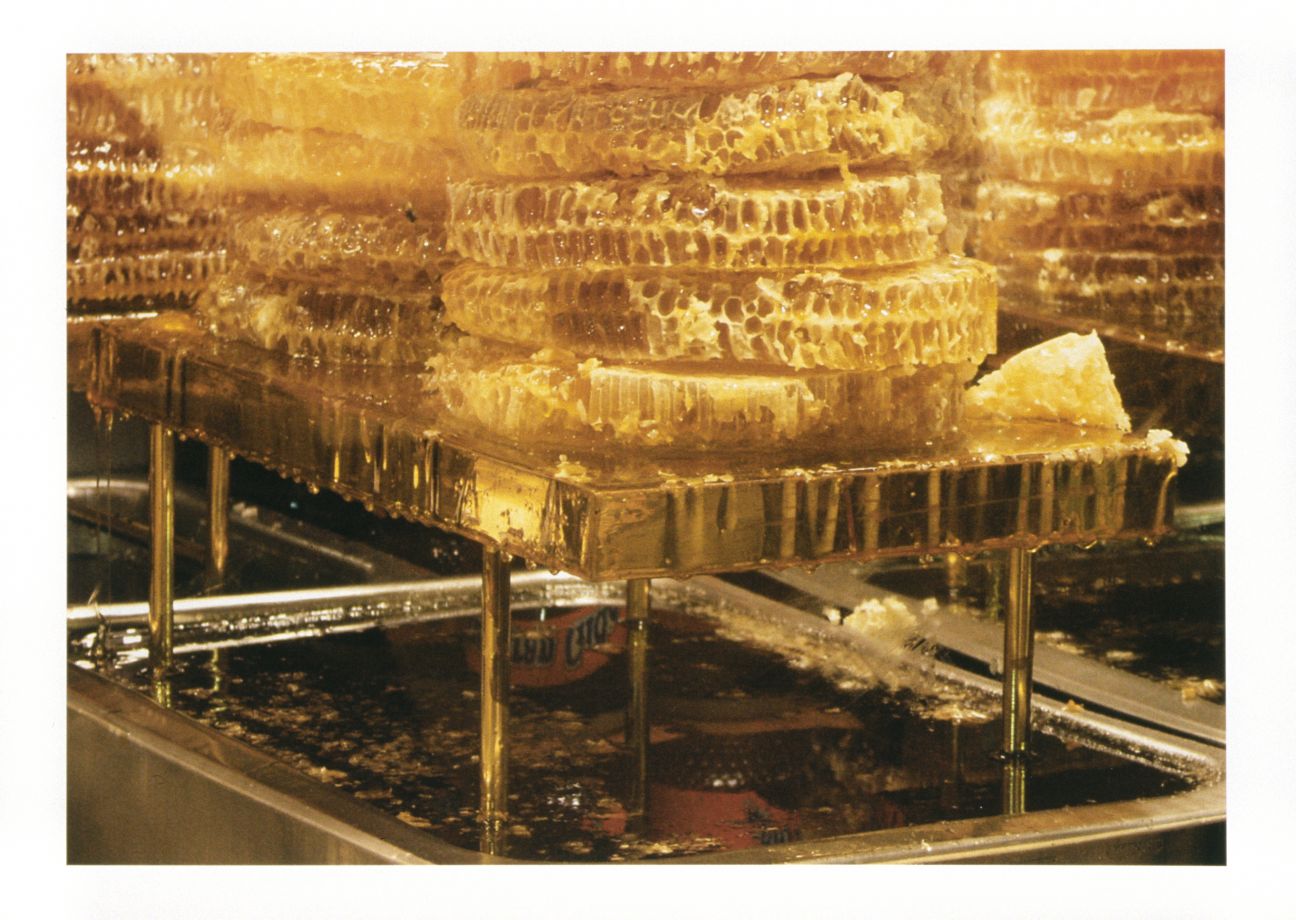
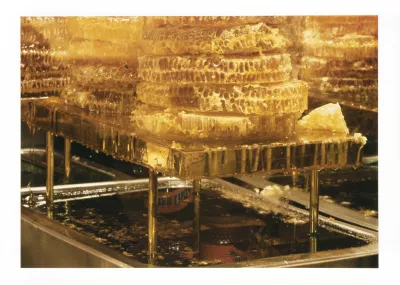
Offset print by Sarkis. Close-up of stacked, dripping honeycombs lying on a golden rack, bathed in golden light.
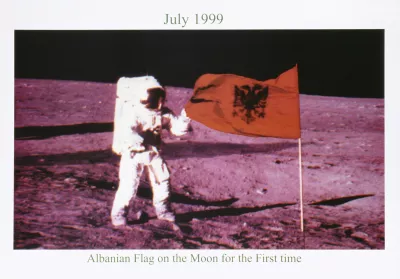
Offset print by Erzen Shkololli. Iconic photograph showing an Apollo 12 astronaut next to the US flag that has just been raised. The Albanian flag is retouched over the American flag. Above the photo is the inscription “July 1999”, the end of the Kosovo war. Below the photo: “Albanian Flag on the Moon for the First time”
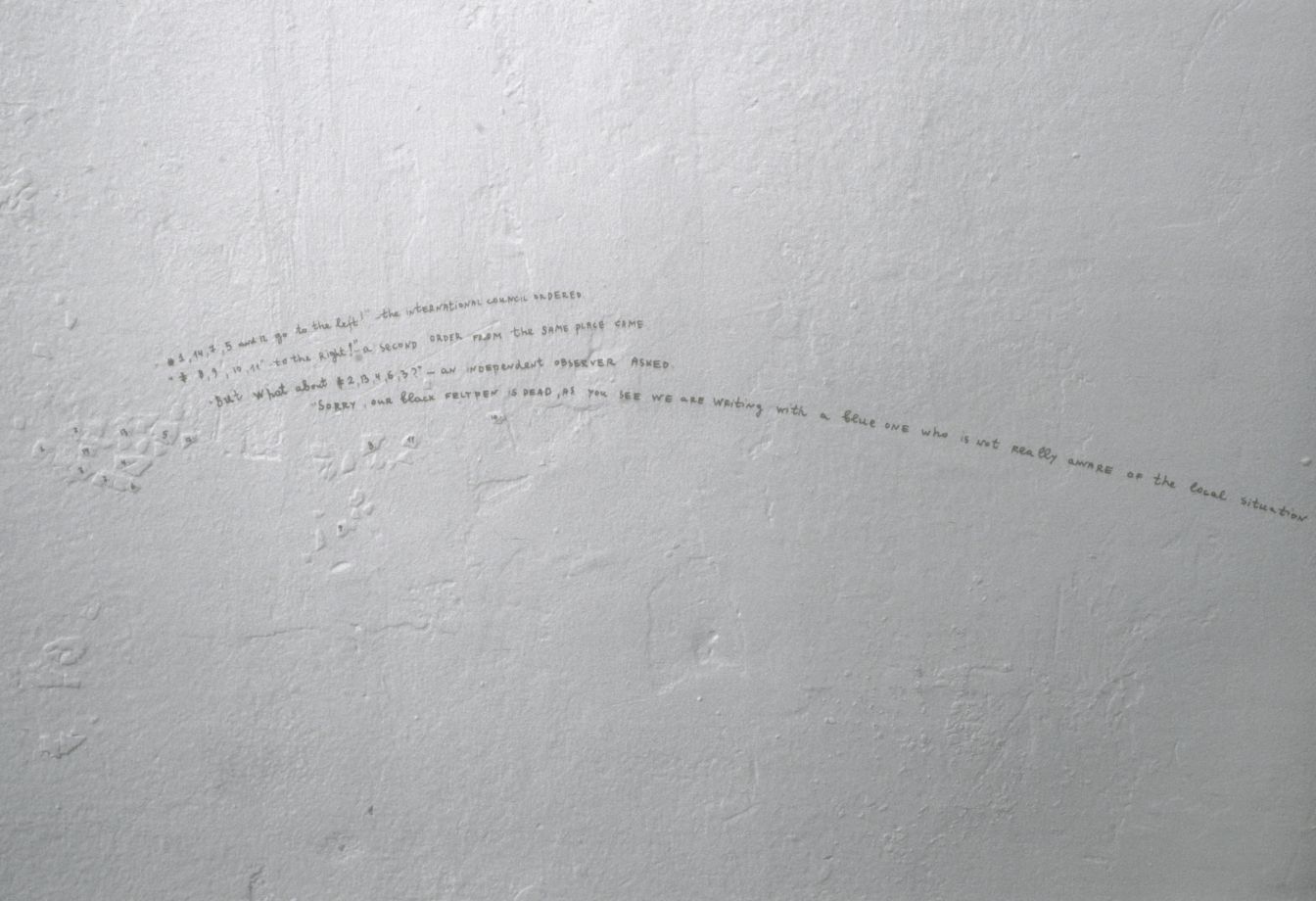
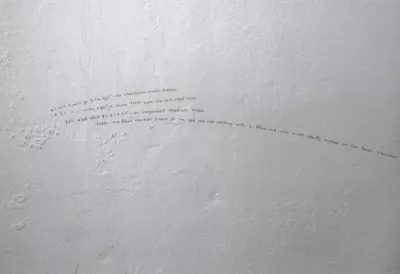
Ink on offset print by Nedko Solakov. A photo of a plastered wall with irregularities numbered in ink. A text with the numbers was written small on the wall. For example: “#1, 14, 7, 5 and 12 go to the left!” the international council ordered
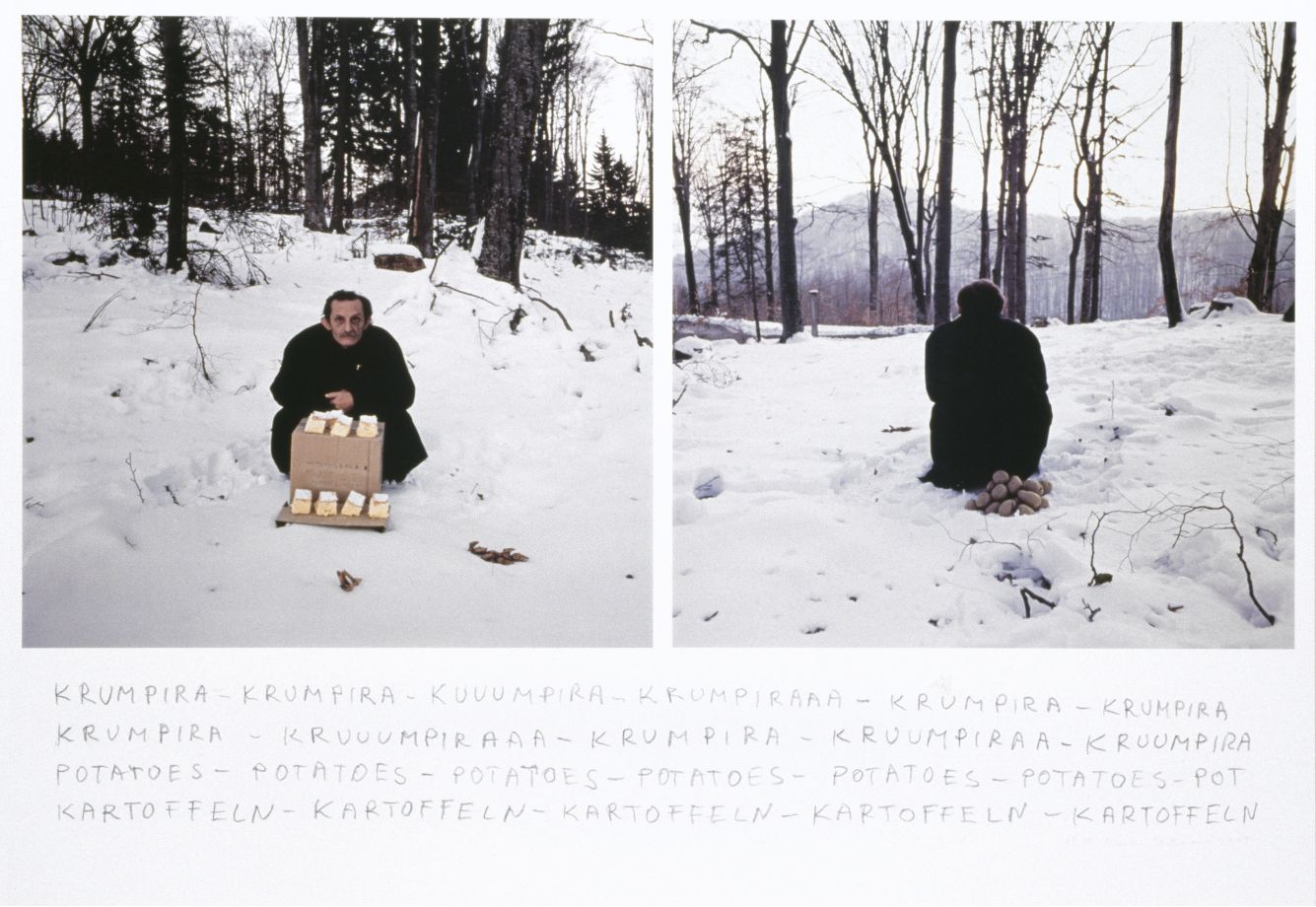
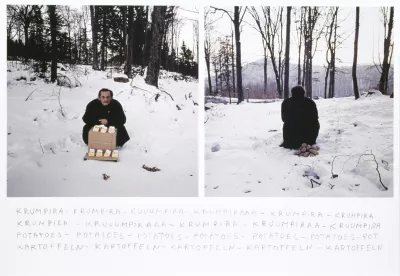
Offset print by Mladen Stilinovic. 2 stills from a video next to each other. 1. Stilinovic crouches at the edge of a snowy forest, in front of him a box with pieces of cake, 2. back view: behind him a pile of potatoes. Underneath, 4 rows written by hand: KRUMPIRA, POTATOES, KARTOFFELN
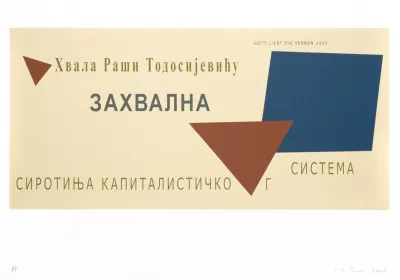
Screen print by Rasa Todosijevic. The title “Thanks to Raša Todosijević, the grateful poor of the capitalist system” is printed in Cyrillic in various typographies between abstract-constructivist forms in blue and red on a beige background.
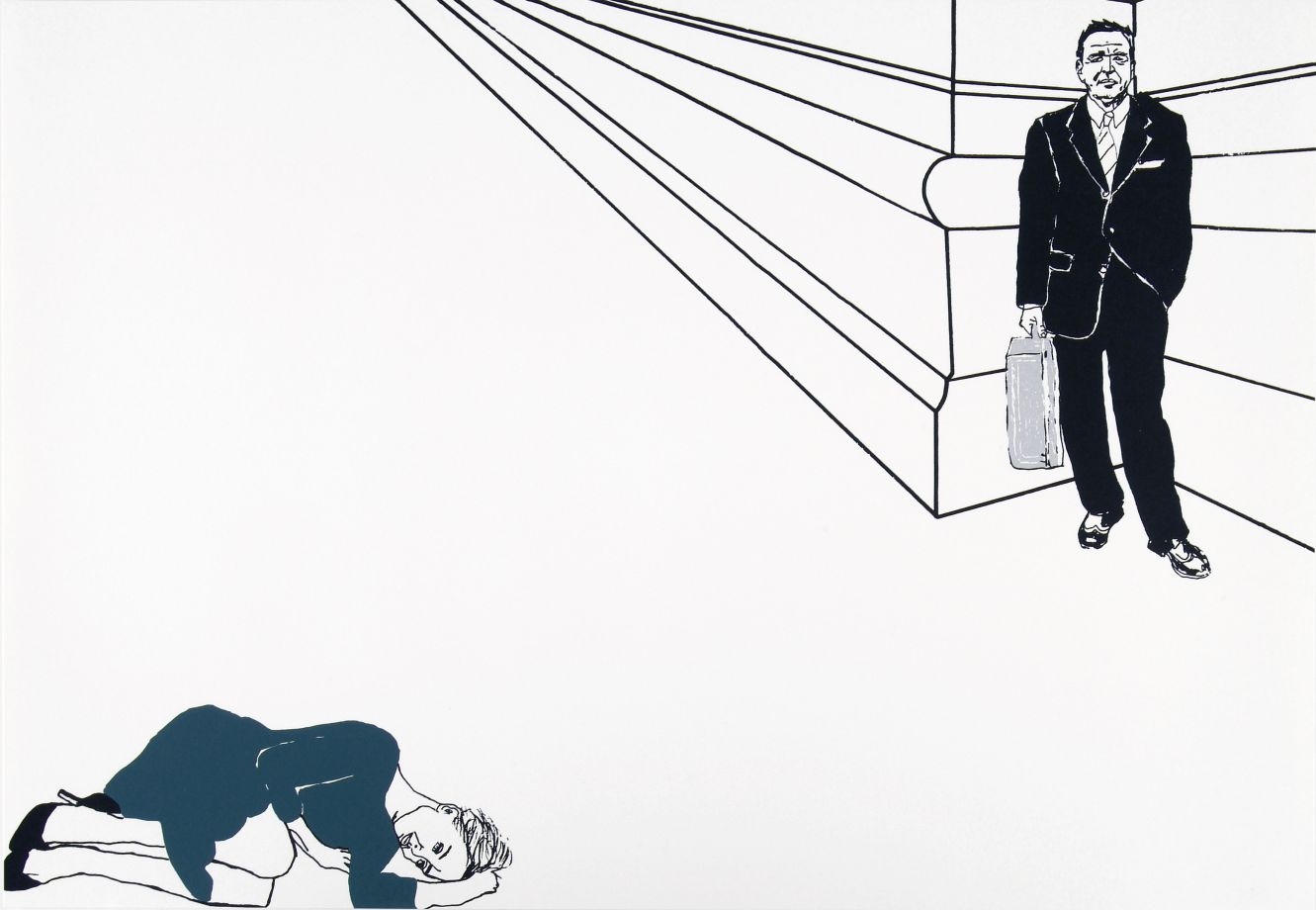
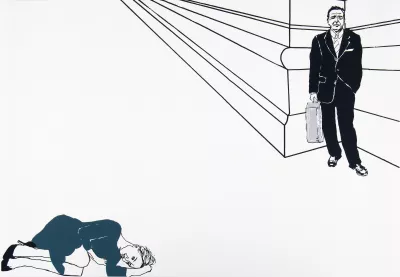
Screen print by Jelena Tomasevic. Realistic depiction, but dreamlike: at the bottom left a woman in an elegant dress and heels lies huddled on the floor, at the top right a man in a suit and tie with a briefcase stands uninvolved in front of a row of houses.
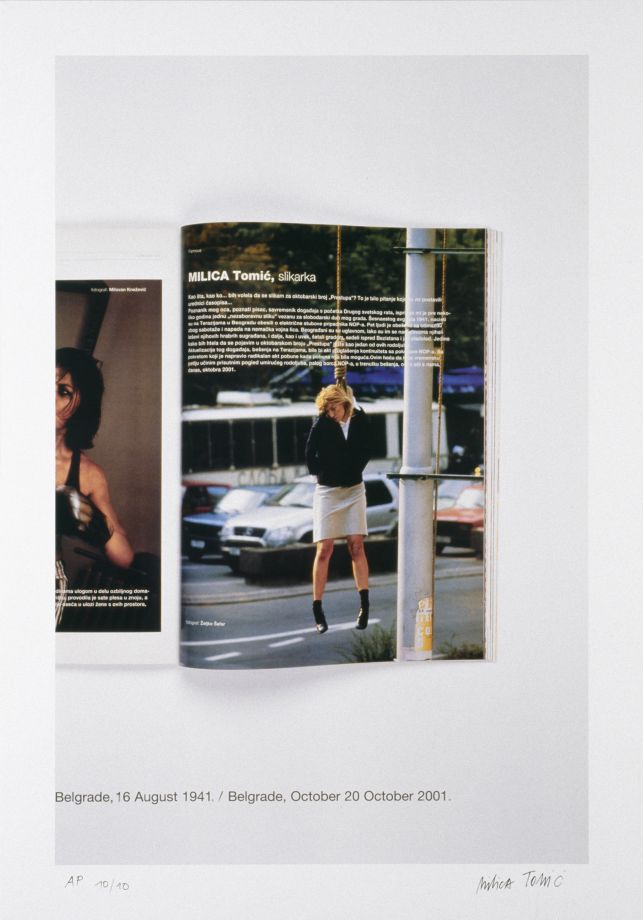
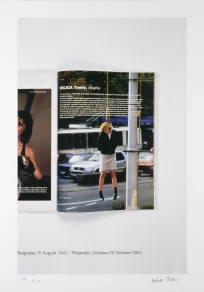
Offset print by Milica Tomic. Page from a Serbian magazine with a full-page photograph of a political demonstration by the artist. She recreates the public hanging of a Serbian resistance fighter in 1941
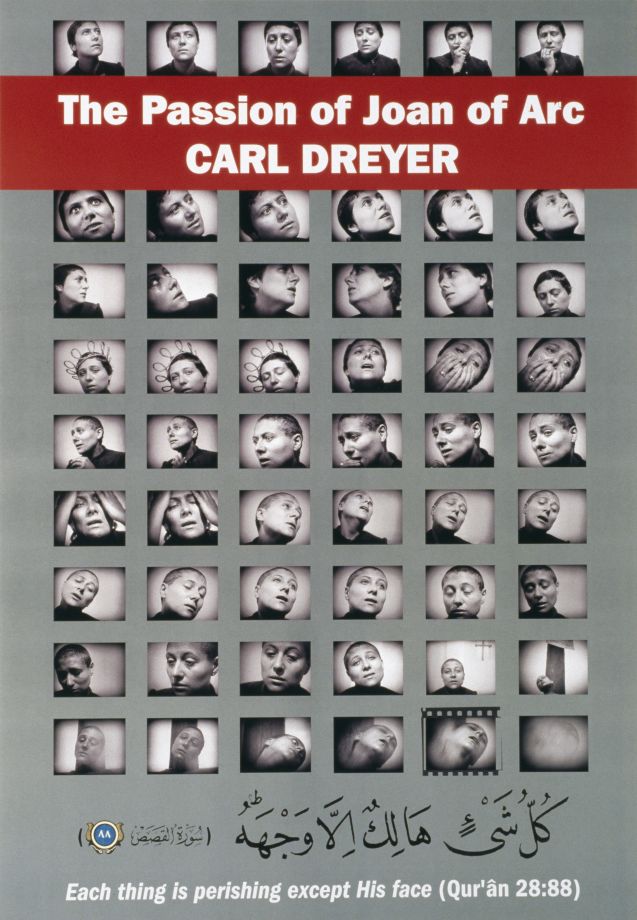
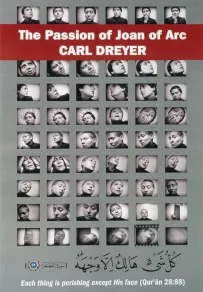
Offset print by Jalal Toufic. 54 film stills with close-ups of the face of a woman re-enacting the interrogation and torture of Joan of Arc. Below a sentence from the Koran: Each Thing is perishing except HIS face

    Participating artists: Marina Abramović, Nevin Aladağ, Halil Altındere, Maja Bajević, Luchezar Boyadjiev, Danica Dakić, Braco Dimitrijević, Ayşe Erkmen, Jakup Ferri, Mona Hatoum, Edi Hila, IRWIN, Sanja Iveković, Šejla Kamerić, Gülsün Karamustafa, Vlado Martek, Aydan Murtezaoğlu, Oliver Musovik, Dan Perjovschi, Marjetica Potrć, Anri Sala, Bülent Şangar, Sarkis, Erzen Shkololli, Nedko Solakov, Mladen Stilinovic, Raša Todosijević, Jelena Tomašević, Milica Tomić and Jalal Toufic

    The print portfolio Love It or Leave It comprises large-format prints by thirty artists, which are brought together in a linen cassette.
    The portfolio was published in the context of the 5th Cetinje Biennial of the same name in Montenegro in 2004, curated by René Block and Nataša Ilić, and contains contributions from a selection of artists participating in the Biennial.
    The Cetinje Biennale is the third part of the so-called Balkan-Trilogy and represents a high point in René Block’s exploration of the contemporary art scene from the countries of south-eastern Europe and the cultural phenomenon of the Balkans. The biennial was preceded by the two thematic exhibition projects In den Schluchten des Balkan (Kunsthalle Fridericianum, Kassel, 2003) and In den Städten des Balkan (various exhibition venues, 2003). The latter was realized over a period of one year in the form of various projects in twelve south-eastern European countries.
    The title of the biennial Love It or Leave It is borrowed from a work by Halil Altındere from 1998, which was shown as part of the biennial in the form of a billboard in the main street and promenade, as well as in other places in the former capital of Montenegro, and is also part of the print portfolio as an offset print. In this context, the Turkish graffito slogan “Ya Sev Ya Terk Et” (Love It or Leave It) alludes to various aspects of the biennial concept, as curator Nataša Ilić explains: “We thought it could relate to the many variations of the things we mentioned – of certain institutional blackmail imposed on cultural production in general and on cultural production in the region in particular, in the sense that you either make a geo-political ‘Balkan’ exhibition or you don’t make any, or that you are expected to produce art that complies to Western ideas and expectations, or that art is in the service of the political agenda of European integration, or, if nothing else, that you are expected, forced even, to try to come to terms with these issues in order to be taken seriously at all.”1
    Text: Katrin Seemann

    1 Nataša Ilić, in: „Cities in Commotion. Nataša Ilić in conversation with Dejan Kršić”, in: Love It or Leave It. 5. Cetinjsko bijenale / Cetinje Biennial V, exhib. cat., Cetinje: Narodni muzej Crne Gore / National Museum of Montenegro; Kassel: Kunsthalle Fridericianum, 2004, p. 17.

    Works in portfolio
    Love It or Leave It